Types
Humidifier vs dehumidifier
They do opposite things, and the cost of guessing wrong is not neutral: adding water to an already-damp house causes real damage.
By Scooter M. · Published · Updated
We earn a commission if you buy through the links on this page, at no extra cost to you. It does not change what we recommend or the order the picks appear in. Full disclosure. Prices checked October 17, 2026.
| # | Product | Best for | Gal/day | Price |
|---|---|---|---|---|
| 1 | 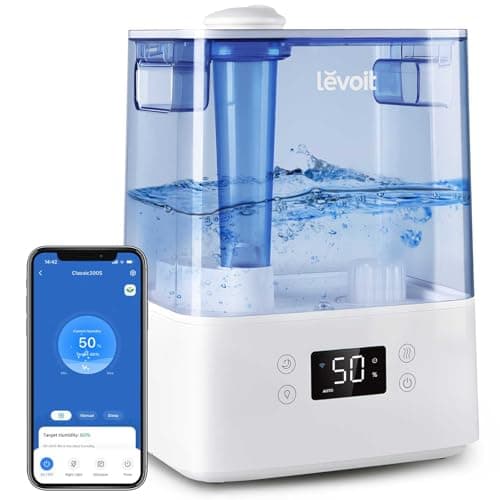 Levoit Classic 300STop pickA 6-liter tank, a genuinely wide top-fill opening and no filter to buy. Its own numbers describe a 190 sq ft machine, not the 505 sq ft on the box. | A bedroom you refill twice a week | 0.63implied · 187 sq ft | |
| 2 | 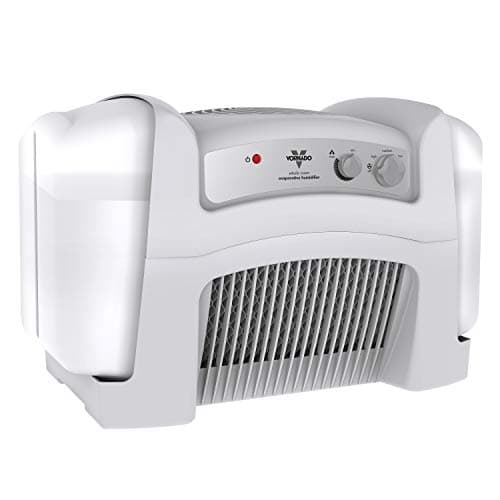 Vornado Evap40Vornado publishes an output figure and a coverage figure, and the two agree. Four gallons a day covers about 1,180 sq ft at our derived rate against a 1,000 sq ft claim. | The only coverage claim here the arithmetic supports | 4.0published · 1,184 sq ft | |
| 3 | 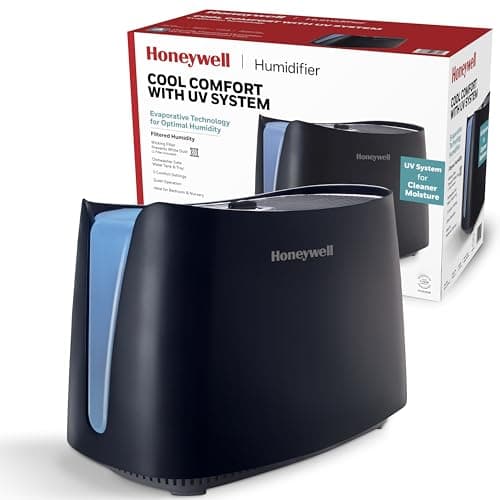 Honeywell HCM350 Germ Free Cool MoistureA break-resistant, dishwasher-safe tank and a wide opening. It is the only unit here designed so the hardest part of ownership is easy. | Cleaning, without qualification | 1.0implied · 296 sq ft |
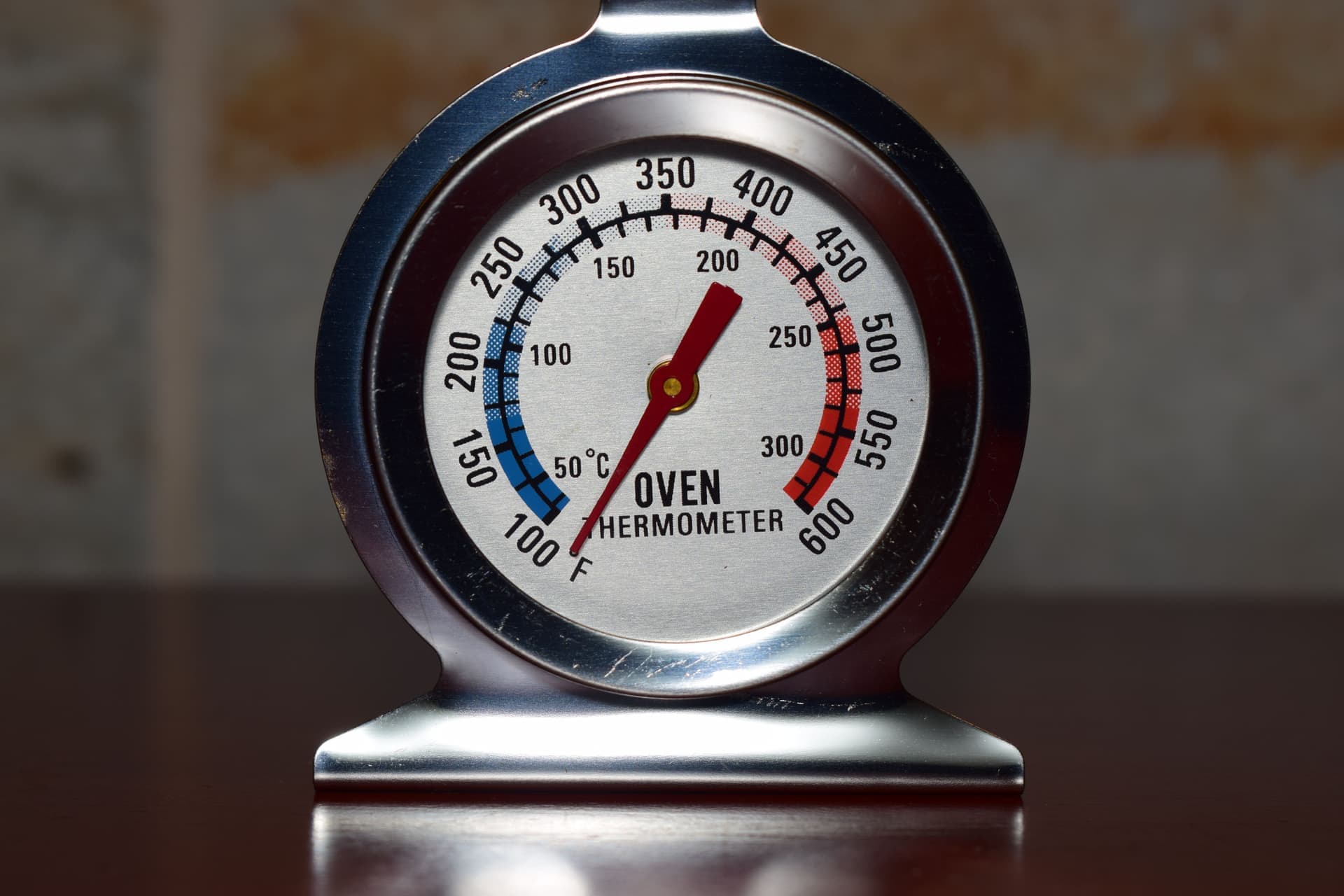
A humidifier adds water vapor to air. A dehumidifier removes it. Choosing between them is not a preference, it is a measurement, and it takes a week and costs about the price of a coffee.
We earn a commission if you buy through the links on this page, at no extra cost to you. It does not change what we recommend or the order the picks appear in. Full disclosure. Prices checked October 17, 2026.
| # | Product | Best for | Gal/day | Price |
|---|---|---|---|---|
| 1 | Levoit Classic 300STop pickA 6-liter tank, a genuinely wide top-fill opening and no filter to buy. Its own numbers describe a 190 sq ft machine, not the 505 sq ft on the box. | A bedroom you refill twice a week | 0.63implied · 187 sq ft | |
| 2 | Vornado Evap40Vornado publishes an output figure and a coverage figure, and the two agree. Four gallons a day covers about 1,180 sq ft at our derived rate against a 1,000 sq ft claim. | The only coverage claim here the arithmetic supports | 4.0published · 1,184 sq ft | |
| 3 | Honeywell HCM350 Germ Free Cool MoistureA break-resistant, dishwasher-safe tank and a wide opening. It is the only unit here designed so the hardest part of ownership is easy. | Cleaning, without qualification | 1.0implied · 296 sq ft |
Symptoms, side by side
| Too dry (under 30%) | Too damp (over 50%) |
|---|---|
| Static shocks off door handles | Musty smell |
| Chapped lips, dry nose, scratchy throat in the morning | Condensation on windows and cold walls |
| Wooden floors shrinking, gaps opening at the boards | Wooden doors sticking and swelling |
| Instruments going out of tune, furniture checking | Mold spots in corners and on ceilings |
| Dry, itchy skin | Clothes and towels not drying |
| Houseplants wilting despite watering | Dust mites, and allergy symptoms indoors |
Why guessing wrong is expensive
The asymmetry matters. Running a humidifier in a house that was already at 55 percent pushes it further past the EPA's stated 50 percent ceiling, and higher levels encourage the growth of biological organisms. In cold weather it also drives condensation onto cold surfaces - window frames, and then wall cavities, where you will not see it until there is a stain.
Running a dehumidifier in an already-dry house is less damaging and still unpleasant: more static, drier skin, and wooden things shrinking. It also costs considerably more in electricity than a humidifier does, because it is a refrigeration cycle rather than a fan.
The seasonal reversal
In most of the US the same house needs both machines, at different times of year, and this is genuinely confusing when you first meet it.
In winter you heat cold outdoor air. Cold air holds very little water in absolute terms, and heating it to room temperature makes its relative humidity collapse, which is why heated houses get dry in January. In summer, warm humid outdoor air comes in and the house does nothing to remove the moisture, so it climbs. Same building, opposite problems, six months apart.
This is the normal case rather than an unusual one. A humidifier from October to March and a dehumidifier from June to September is a perfectly ordinary arrangement in a lot of the country.
The basement exception
Basements often run the opposite way to the floor above them at the same moment, because they sit against cool earth and are the coldest surfaces in the house. A house at 28 percent upstairs in January can easily have a basement at 55 percent. Measure both. Do not assume the reading upstairs describes downstairs. See basement sizing.
If you genuinely need both
- Never run them in the same room at the same time. They will fight, both will run continuously, and you will pay for both.
- Different floors is normal. A dehumidifier in the basement and a humidifier upstairs is a common and correct arrangement.
- Store the idle one dry. The out-of-season machine goes away clean and completely dried out, with any wick removed. A damp appliance in a cupboard for six months is the worst version of every problem on this site.
- Keep one hygrometer per floor. They are cheap and the readings genuinely differ.
What about a cough?
A very common search is humidifier or dehumidifier for a cough, and we are not going to answer it. Which direction of humidity change helps a particular respiratory symptom is a clinical question, nobody here holds a medical credential, and this site does not invent them. What we can say without stepping outside our lane: the EPA's stated band for indoor air is 30 to 50 percent, and whichever machine gets your house into that band is the right one. Anything beyond that, ask a clinician.
The picks, in full
Top pick · A bedroom you refill twice a week
Levoit Classic 300S
A 6-liter tank, a genuinely wide top-fill opening and no filter to buy. Its own numbers describe a 190 sq ft machine, not the 505 sq ft on the box.
The interesting number is not 6 liters, it is 60 hours. A 1.58-gallon tank that lasts 60 hours on low is moving 0.63 gallons of water a day, and 0.63 gallons a day is what covers about 187 square feet at the rate we derive from Aprilaire's own published sizing. That is a bedroom. It is not the 505 square feet on the specification table.
Both figures are true and they describe different settings. Levoit publishes the endurance of the quietest setting and the ceiling of the loudest, and never the output that connects them, so a buyer has no way to check the coverage claim. That is not a Levoit problem, it is a category problem, and it is the reason every roundup here shows the implied figure beside the claimed one.
What you are actually buying is the absence of a filter. No wick means no 30-to-60-day replacement cycle and no annual filter bill, and it also means every mineral in your tap water leaves the machine as white dust or stays behind as scale. Run low-mineral water or accept the descaling, which the EPA's own humidifier guidance is blunt about.
What works
- No wick or replacement filter, so the running cost after purchase is water and 26 watts
- 26 W is genuinely low: at the June 2026 US average tariff a full heating season of overnight running is a few dollars
- The top-fill opening is wide enough to get a hand and a brush inside, which is most of what makes a humidifier easy to keep clean
What does not
- The 505 sq ft coverage claim cannot be reconciled with the published tank and run time
- Ultrasonic, so hard water becomes airborne white dust unless you use low-mineral water
- Levoit publishes no gallons-per-day figure at any setting
Skip this ifyour water is hard and you will not commit to distilled. An ultrasonic unit atomizes whatever is dissolved in the tank, and this one has no wick to catch it.
The arithmetic
- Implied output (low mist)
- 0.63 gal/day
- Covers, at 296 sq ft per gal/day
- 187 sq ft
- Maker’s coverage claim
- 505 sq ft
- Output that claim would need
- 1.7 gal/day
Output derived as tank capacity divided by published run time, times 24. Coverage rate derived from Aprilaire’s own published capacity-and-coverage pairs.
Published specification
- Tank
- 1.58 gal / 6 LSource
- Output/day
- not publishedLevoit publishes tank size and low-setting run time, not gallons per day
- Coverage
- 215-505 sq ft / 20-47 m2Levoit's own figure. Its published tank and run time imply roughly 187 sq ft at our derived rate.Source
- Run time
- Up to 60 hOn the low mist settingSource
- Power
- 26 WAC 120 V, 60 HzSource
- Noise
- 30 dB or lessSource
- Filter
- None requiredA water filter sponge is included and descaling pads are sold separately, but there is no wick to replaceSource
- Cleaning
- Top-fill opening, brush includedLevoit's own wording: refill without flipping the tank overSource
#ad · how this is funded · price as of October 17, 2026
Pick 2 · The only coverage claim here the arithmetic supports
Vornado Evap40
Vornado publishes an output figure and a coverage figure, and the two agree. Four gallons a day covers about 1,180 sq ft at our derived rate against a 1,000 sq ft claim.
Run the check that fails everywhere else on this page and it passes here. Four gallons a day at 296 square feet per gallon per day is about 1,180 square feet of coverage, against a claim of 1,000. Vornado left itself margin instead of taking it.
It passes because it is evaporative. A wick and a fan can only put as much water into the air as the air will accept, which is why an evaporative unit self-limits near 50% relative humidity and why it cannot produce white dust: the minerals stay in the wick. The EPA's guidance to use low-mineral water exists mainly because ultrasonic and impeller units disperse what is dissolved in the tank, and this design does not.
The cost of that is the wick. Two of them, on a schedule Vornado does not publish, which is the recurring bill an ultrasonic unit does not have. Whether that trade is worth it is arithmetic, and it is worked through in full on our filter-cost page.
What works
- Publishes an output figure, and the coverage claim survives being checked against it
- Evaporative, so it cannot produce white dust and self-limits near a safe humidity
- Five-year warranty, the longest published here
What does not
- Two wicks to replace on an interval Vornado does not publish
- A fan moving air across a wet wick is audible, and no dB figure is published
- No rated wattage published
Skip this ifyou want silence. Every evaporative unit is a fan, and Vornado publishes no noise figure for this one.
The arithmetic
- Published output (continuous on high)
- 4.0 gal/day
- Covers, at 296 sq ft per gal/day
- 1,184 sq ft
- Maker’s coverage claim
- 1,000 sq ft
- Output that claim would need
- 3.4 gal/day
Output as the manufacturer publishes it. Coverage rate derived from Aprilaire’s own published capacity-and-coverage pairs.
Published specification
- Tank
- 4 galSource
- Output/day
- Up to 4 galVornado's wording: up to a 4 gallon water output when operated continuously on highSource
- Coverage
- Up to 1,000 sq ftSupported by its own published output. This is the only unit in the set where that is true.Source
- Run time
- not publishedVornado publishes output instead, which is more useful
- Power
- not published
- Filter
- Two humidifying wicksTwo are supplied, one front and one rear. No replacement interval is published.Source
- Cleaning
- Vornado states easy to clean and operateSource
#ad · how this is funded · price as of October 17, 2026
Pick 3 · Cleaning, without qualification
Honeywell HCM350 Germ Free Cool Moisture
A break-resistant, dishwasher-safe tank and a wide opening. It is the only unit here designed so the hardest part of ownership is easy.
One gallon over 24 hours is one gallon a day, which at our derived rate is about 296 square feet. Honeywell says medium room. Those two statements agree, which is a low bar that most of this category fails to clear.
The reason to buy it is the tank. Dishwasher-safe and break-resistant, with an opening wide enough to actually reach inside, against an EPA instruction to clean every third day. A humidifier you will genuinely clean twice a week beats a larger one you will clean twice a winter, and this is the only unit here whose maker treats that as a design requirement rather than a footnote.
There is one inconsistency worth naming. The specification table on Honeywell's own page says a 1 gallon tank; the feature copy a few hundred pixels above it says 1.1 gallons. It is a small discrepancy and it is on the maker's own page, which is a fair illustration of why we quote the table and say which one we took.
What works
- Dishwasher-safe, break-resistant tank with a wide opening, which is the whole ballgame for maintenance
- The wicking filter captures minerals, so no white dust regardless of your water
- The published tank and run time are consistent with the room size claimed
What does not
- HAC504 wicks are a recurring cost with no interval published on the product page
- One gallon a day is a bedroom, not a floor of a house
- The maker's own page states two different tank capacities
Skip this ifyou need to humidify an open-plan living space. This is a one-room machine and its own figures say so.
The arithmetic
- Implied output (continuous)
- 1.0 gal/day
- Covers, at 296 sq ft per gal/day
- 296 sq ft
Output derived as tank capacity divided by published run time, times 24. Coverage rate derived from Aprilaire’s own published capacity-and-coverage pairs.
Published specification
- Tank
- 1 galHoneywell's own specification table says 1 gallon; the marketing copy on the same page says 1.1. We quote the table.Source
- Output/day
- not publishedTank and run time only
- Coverage
- Medium roomHoneywell publishes a size class rather than a number. Its published tank and run time imply about 1 gallon per day, or roughly 296 sq ft at our derived rate.Source
- Run time
- Up to 24 hSource
- Power
- not published
- Filter
- HAC504 Filter AOne included. Honeywell states its own filters should be used.Source
- Cleaning
- Dishwasher safe, break resistant tank, wide openingHoneywell's own wording. It also states the wicking filter removes impurities from the water, reducing white dust.Source
#ad · how this is funded · price as of October 17, 2026
Questions people actually ask
How do I know if I need a humidifier or dehumidifier?
Measure. A cheap hygrometer left in the room for a week settles it: under 30 percent relative humidity means you need a humidifier, over 50 percent means a dehumidifier, and between the two means neither. Symptoms can mislead - dry skin and a musty smell can both be present in a house with an uneven layout.
Can you use a humidifier and a dehumidifier in the same house?
Yes, and it is common - just not in the same room at the same time, where they will fight and both run continuously. A dehumidifier in the basement and a humidifier upstairs is a normal arrangement, because a basement sits against cool earth and often runs much damper than the floor above.
Why does my house need a humidifier in winter and a dehumidifier in summer?
Because heating cold outdoor air collapses its relative humidity: cold air holds very little water, and warming it to room temperature makes the same amount of moisture read as a much lower percentage. In summer, warm humid outdoor air enters and nothing removes the moisture. Same house, opposite problems.
Is a humidifier or dehumidifier better for a cough?
That is a clinical question and we are not qualified to answer it. Nobody at Vent & Vane holds a medical credential. What we can say is that the EPA's stated band for indoor air is 30 to 50 percent relative humidity, and getting your house into that band is the goal whichever machine does it. For anything symptom-specific, ask a clinician.
Sources
Every figure on this page came from one of the documents below, read on the date shown. We do not cite other review sites, forum posts or video reviews as sources of fact.
- US Environmental Protection Agency - Use and Care of Home Humidifiers (relative humidity ceiling, three-day cleaning interval, low-mineral water, microorganism warning)
- Levoit Classic 300S - manufacturer spec page (retrieved September 1, 2026)
- Vornado Evap40 - manufacturer spec page (retrieved September 1, 2026)
- Honeywell HCM350 - manufacturer spec page (retrieved September 1, 2026)
Read next

Ideal indoor humidity in winter
The 30-50% relative humidity band, the EPA's stated ceiling, and the window-condensation limit that overrides it in cold weather.
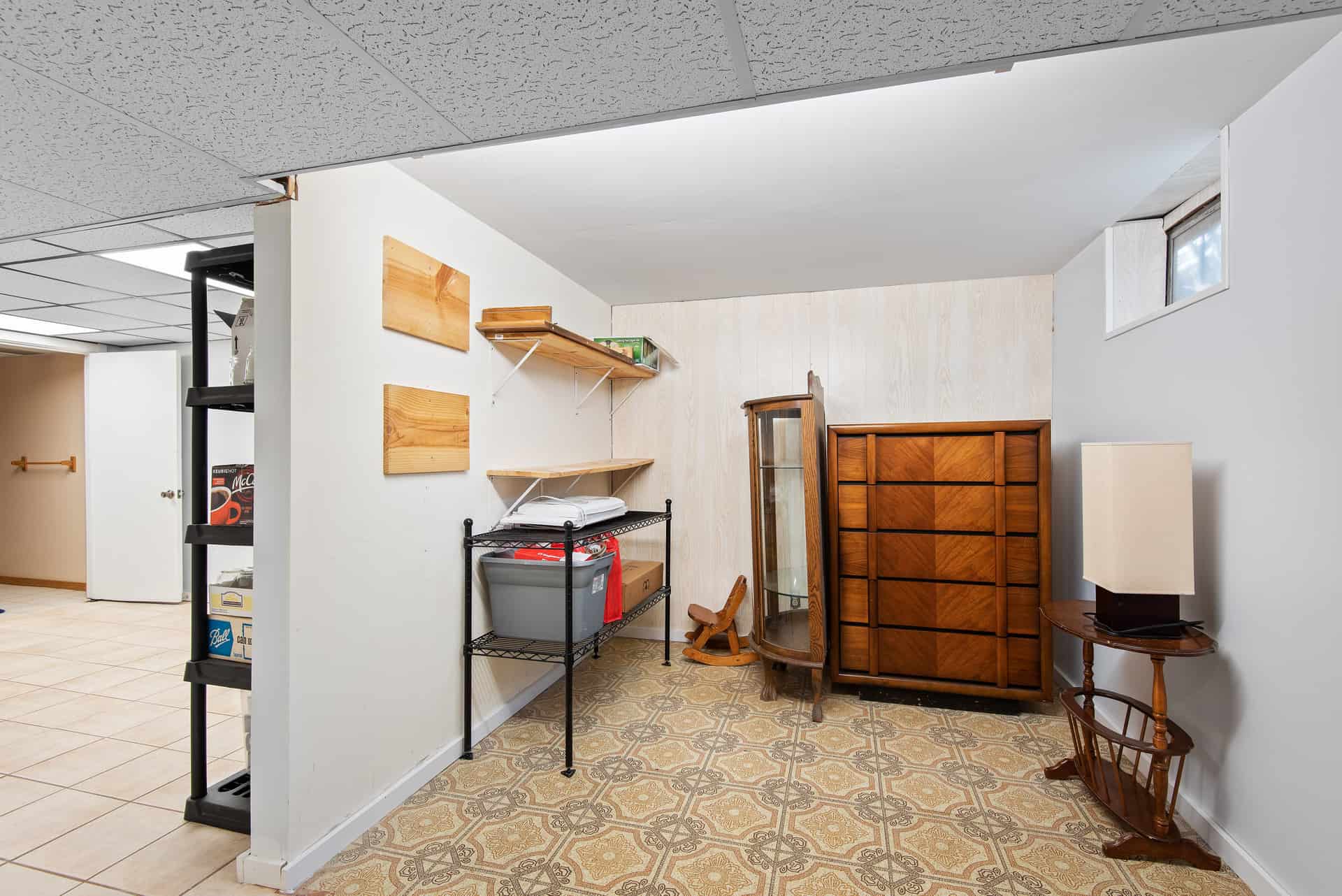
Basements
Sizing a humidifier for a basement
How to tell whether a basement needs humidifying or dehumidifying, and the sizing arithmetic if it genuinely needs moisture added.
Top pick: Levoit Superior 6000S · 2.0 gal/day
#ad · how this is funded · price as of October 17, 2026
Which appliance
Humidifier vs air purifier
The difference between adding moisture and removing particles, how to tell which problem you have, and the case where a humidifier makes things worse.
Top pick: Levoit Classic 300S · 0.63 gal/day
#ad · how this is funded · price as of October 17, 2026
Found a number that is wrong? Tell us and we will fix it and say so. How we pick shows every formula used on this page.