Cleaning
Cleaning a humidifier with vinegar
Vinegar dissolves scale. It does not disinfect well, and it must never meet bleach. Both of those facts change how you should use it.
By Scooter M. · Published · Updated
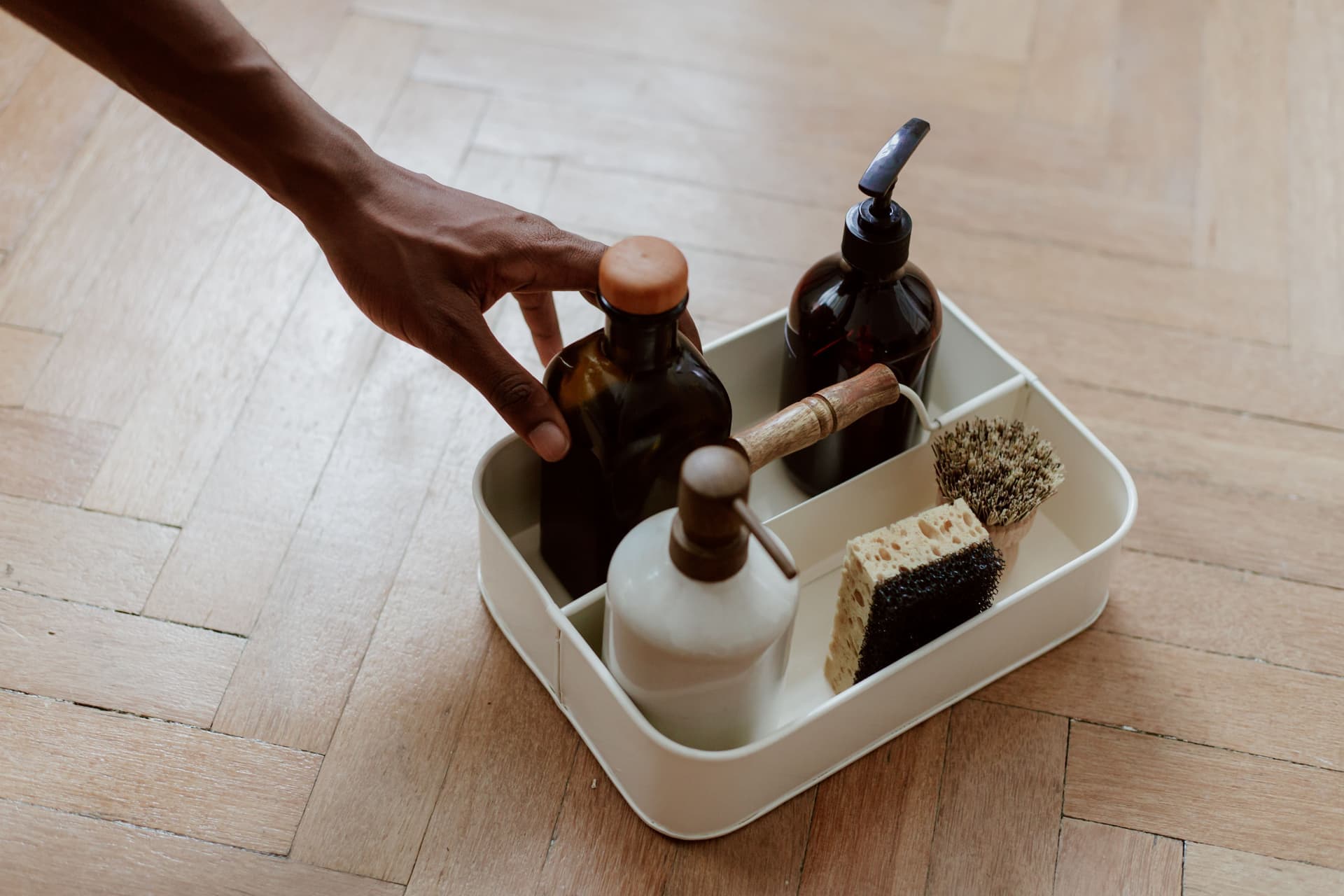
White vinegar is the default humidifier cleaner for a specific chemical reason: the deposits that build up inside a humidifier are mostly calcium and magnesium carbonates from your water, and a mild acid dissolves carbonates. That is the whole mechanism, and it is why vinegar works on scale and works poorly on a biofilm.
The method
The soak time below is not our estimate. Levoit publishes it for its own units: one cup of white vinegar with water, 20 to 30 minutes.
Descaling with white vinegar · PT35M
You needPlain white vinegar (about 1 cup), A soft brush - most units ship with one, A clean towel, 3% hydrogen peroxide, if you are also disinfecting
- Unplug and disassembleEverything that separates without tools. Tank, base, tray, cap, nozzle, wick housing. Set any wick or filter aside dry - do not soak it in vinegar unless the manual says to.
- Empty the base, not just the tankThe base holds warm standing water and is where scale and films appear first. Tip it out and rinse it.
- Make the solutionOne cup of plain white vinegar, topped up with water, enough to cover the surfaces you can see deposits on. Distilled white vinegar at ordinary supermarket strength is what the manufacturers mean; nothing stronger is needed. If you own a Levoit, the model-by-model version of this is on how to clean a Levoit humidifier.
- Soak for 20 to 30 minutesLevoit's own published interval. Longer does no harm on plastic. If the scale is heavy, leave it the full 30 and expect to repeat rather than reaching for something stronger.
- Brush every wetted surfaceThe EPA is explicit about using a brush to scrub the tank and remove scale and deposits, because scale acts as a breeding ground for microorganisms. Get into the corners of the base and around the transducer or the wick tray.
- Rinse thoroughlySeveral changes of clean water. Vinegar left behind will smell for a day or two once the unit warms up, which is the usual complaint and the usual cause.
- Disinfect, if neededOnly after rinsing. 3% hydrogen peroxide on all water-contact surfaces, then rinse thoroughly again. Never combine with bleach or with vinegar residue.
- Dry completely, then reassembleParts on a towel until genuinely dry. Reassembling damp is how you undo the whole job.
Three things not to do
- Do not mix it with bleach. Chlorine bleach and any acid, vinegar included, release chlorine gas. If you use both at different times, rinse thoroughly in between. Poison control centers field thousands of calls a year about exactly this combination.
- Do not use dish soap. It foams, it is very hard to rinse out of a textured plastic base, and the residue interferes with the wick in an evaporative unit.
- Do not soak a wick or filter in vinegar unless the manual explicitly permits it. A wick is designed to hold water and release it, and soaking it in acid can break down its structure and any antimicrobial treatment on it. See filter care.
How often you will actually need to do this
Descaling frequency is a function of your water, not your machine. The harder the water, the more dissolved mineral goes into the tank and the more gets left behind.
| Water | Descale roughly | Also expect |
|---|---|---|
| Distilled or demineralized | Rarely - once a season | No white dust at all |
| Soft tap water | Every 2 to 4 weeks | Light film in the base |
| Hard tap water | Every 1 to 2 weeks | Visible crust, and white dust from an ultrasonic unit |
None of this replaces the disinfecting schedule. The EPA's every-third-day instruction is about microorganisms, not scale, and it applies whatever water you use. Descaling is the extra job that hard water adds on top. If the interval above sounds unmanageable, the honest fix is upstream - see which water to use.
Why the smell lingers, and what to do
The most common complaint after a vinegar clean is that the room smells of vinegar for a day. It is almost always under-rinsing, and it is worse in textured or ribbed plastic bases where solution sits in the grain. Three or four changes of clean water, agitated, will clear it. If it persists, run the unit once with plain water and the outlet pointed at an open window before putting it back in a bedroom.
Questions people actually ask
How long should you soak a humidifier in vinegar?
Twenty to thirty minutes. That is Levoit's own published interval for its units: one cup of white vinegar topped up with water. Longer will not damage plastic, but if 30 minutes has not shifted the scale, repeat the soak rather than using something stronger.
What kind of vinegar do you use to clean a humidifier?
Plain distilled white vinegar at ordinary supermarket strength. Not cleaning vinegar at elevated concentration, not apple cider vinegar, which contains sugars and will leave a residue of its own.
Can you mix vinegar and bleach to clean a humidifier?
No, never. Chlorine bleach and any acid, including vinegar, release chlorine gas. This is one of the most common household chemical accidents. If you use both at different times, rinse thoroughly in between.
Does vinegar kill mold in a humidifier?
Not reliably. Vinegar is a descaler: it dissolves mineral deposits. For disinfecting, the EPA specifically recommends cleaning all water-contact surfaces with a 3% solution of hydrogen peroxide, followed by thorough rinsing. Descale first, disinfect second, rinse between the two.
Why does my humidifier smell of vinegar after cleaning?
Under-rinsing, almost always. Solution sits in the grain of a textured plastic base and comes back out when the unit warms up. Three or four changes of clean water, agitated, usually clears it.
Sources
Every figure on this page came from one of the documents below, read on the date shown. We do not cite other review sites, forum posts or video reviews as sources of fact.
- US Environmental Protection Agency - Use and Care of Home Humidifiers (relative humidity ceiling, three-day cleaning interval, low-mineral water, microorganism warning)
- Levoit Classic 160 - manufacturer spec page (retrieved September 1, 2026)
- National Capital Poison Center - the US poison helpline (1-800-222-1222). Cited for the standing advice never to combine household cleaning products; chlorine bleach plus an acid such as vinegar releases chlorine gas.
Read next

How to clean a humidifier
The full cleaning method, the EPA's stated intervals, and the two corrections this category keeps getting wrong.
Cleaning a humidifier without vinegar
The alternatives to vinegar, what each is actually for, and a straight answer on whether bleach belongs anywhere near a humidifier.

White dust: your water, made airborne
What white dust is, why only ultrasonic and impeller units produce it, and the three fixes ranked by how well they work.
Found a number that is wrong? Tell us and we will fix it and say so. How we pick shows every formula used on this page.