Sizing
Gallons per day: the derivation
This is the page the rest of the site rests on. It shows exactly where our 296 square feet per gallon per day comes from, what it can be used for, and the four things it cannot tell you.
By Scooter M. · Published · Updated
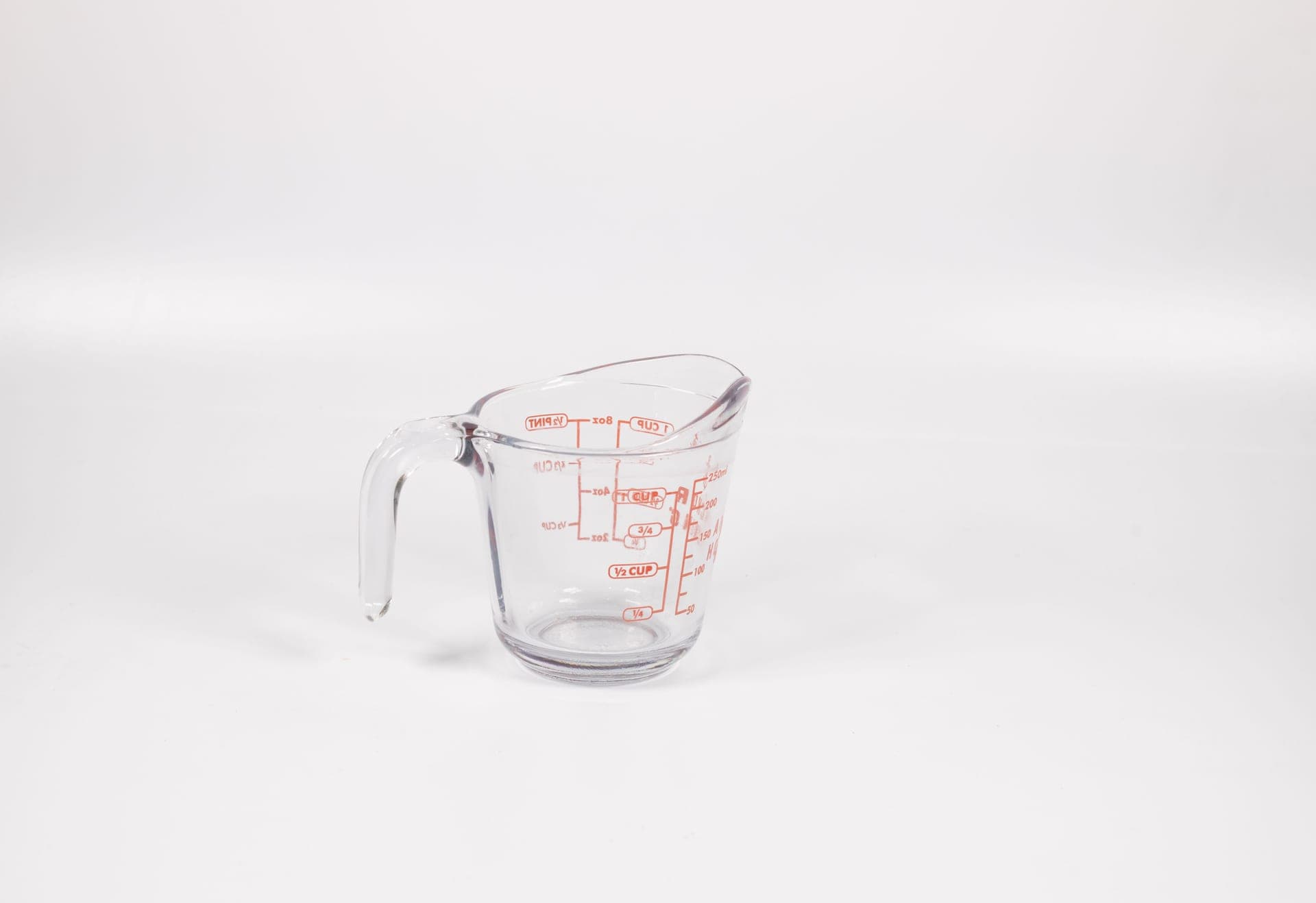
Every sizing figure on this site traces back to one constant: 296 square feet of floor area per gallon per day, at an 8 ft ceiling, in a tightly constructed home. This page is where that number is derived, in full, so you can decide whether to trust it rather than taking our word.
Why we could not just cite the standard
Residential humidifier sizing in the United States is governed by AHRI Guideline F. It is the right document and we tried to read it. On 1 September 2026 the PDF on ahrinet.org returned HTTP 403 to our request, and we do not have a copy through any other route.
So we did not cite it as though we had. Paraphrasing a standard you have not read is how a wrong number gets laundered into a hundred other pages, and this category has plenty of examples. What follows is a derivation from primary data we could actually obtain, with the standard named as the thing it ultimately rests on.
The three pairs
Aprilaire is the only manufacturer in our fetched set that publishes both a capacity in gallons per day and a coverage in square feet for the same unit, and states that the pairing follows AHRI Guideline F for tightly constructed homes. Three of its whole-house models, read from shop.aprilaire.com on 1 September 2026:
| Model | Published capacity | Published coverage | Coverage / capacity |
|---|---|---|---|
| Model 500 | 12 gal/day | 3,600 sq ft | 300.0 sq ft per gal/day |
| Model 400 | 17 gal/day | 5,000 sq ft | 294.1 sq ft per gal/day |
| Model 700 | 18 gal/day | 5,300 sq ft | 294.4 sq ft per gal/day |
Inverted, that is roughly 0.0034 gallons per day per square foot, or a gallon a day for every 296 square feet. Applied to a room:
What this number cannot tell you
Naming the limits of a method is the strongest signal that the rest of it is real, so here they are in plain terms. Four things this constant does not know:
- How leaky your house is. Aprilaire's figures describe tightly constructed homes. A drafty 1920s house exchanges far more air with the outdoors and therefore loses far more moisture. Aprilaire does not publish a multiplier for average or loose construction and we have not invented one. For an older house, treat the output as a floor rather than a target.
- How cold it is outside. Humidification load rises as outdoor air gets colder and drier, because the air coming in has less moisture in it to begin with. A single annual constant averages that away. On the coldest week of the year you will need more than it says.
- What ceiling height the source figures assume. Aprilaire publishes square feet, not cubic feet, and does not state the ceiling height behind the number. We assume the near-universal 8 ft and scale from there. If their internal assumption were 9 ft, every figure on this site would be about 12% conservative.
- Whether the air will actually reach the space. A portable unit in a bedroom with the door shut is humidifying that bedroom. The same unit is not humidifying the rest of the floor, regardless of what the arithmetic says about square footage. Size the space that air can circulate through, not the space on the floor plan.
Using it to check a manufacturer's claim
The most useful thing you can do with the constant is run it backwards. Take any humidifier's coverage claim, divide by 296, and you have the daily output that claim requires. Then look for that output on the product page. Here is what happens when you do it across our set:
| Unit | Coverage claimed | Output that needs | Output published or implied |
|---|---|---|---|
| Vornado Evap40 | 1,000 sq ft | 3.4 gal/day | 4.0 published - claim holds |
| Levoit LV600S | 753 sq ft | 2.5 gal/day | 3.49 published on max warm mist - holds |
| Honeywell HCM350 | 'medium room' | n/a - no number claimed | 1.0 implied |
| Levoit Classic 300S | 505 sq ft | 1.7 gal/day | 0.63 implied on low |
| Levoit OasisMist 1000S | 600 sq ft | 2.0 gal/day | 0.62 implied on low |
| Levoit Superior 6000S | 3,000 sq ft | 10.1 gal/day | 2.0 implied on low |
| AIRCARE MA0800 | 2,600 sq ft | 8.8 gal/day | 1.67 implied at max run time |
| Canopy Large Room | 1,000 sq ft | 3.4 gal/day | nothing published to compute with |
Read that table carefully, because the honest interpretation is narrower than it first looks. The implied figures are computed from the run time each maker publishes, and that run time is always for the quietest, lowest setting - the flattering one. The coverage claims describe the loudest setting. So most of these gaps are not lies; they are two true statements about opposite ends of the same machine, with the number that would connect them left out.
That is still a problem, and it is the problem this site exists to fix. If a maker will not publish output at the setting its coverage claim describes, a buyer has no way to check the claim, and the practical result is that people buy for the number on the front of the box and get the number on the back.
Which is why three makers deserve credit
Vornado publishes up to a 4 gallon water output when operated continuously on high, and claims 1,000 square feet. Levoit publishes 550 mL per hour maximum warm mist for the LV600S, which is 3.49 gallons a day, against a 753 square foot claim. Aprilaire publishes gallons per day for its entire whole-house line. In all three cases the claim survives being checked, which is the entire test.
Publishing a checkable number is a small thing that almost nobody in this category does, and it is worth saying so out loud. When you are choosing between two units with similar prices and similar tanks, the one whose maker told you the output is a meaningfully safer purchase, because it is the one whose claim you were allowed to verify.
Questions people actually ask
How many gallons per day does a humidifier use?
It uses exactly as much as it evaporates, so daily water use and daily output are the same number. A bedroom unit typically moves half to one and a half gallons a day. A whole-house unit can move twelve to eighteen. You can compute any unit's figure by dividing its tank capacity by its published run time and multiplying by 24, remembering that the published run time is almost always for the lowest setting.
Where does the 296 square feet per gallon per day come from?
From Aprilaire's own published capacity-and-coverage pairs for its Model 400, 500 and 700, which the company states follow AHRI Guideline F for tightly constructed homes. Those pairs give 294.1, 300.0 and 294.4 square feet per gallon per day. The mean is 296.2 and we round to 296.
Is this the same as the AHRI Guideline F method?
No, and we do not claim it is. AHRI Guideline F is the standard, and its text was not available to us - ahrinet.org returned HTTP 403. What we have is a rate derived from one manufacturer's product listings that state they follow it. That is a reasonable proxy and it is not the standard itself.
Why do published sizing recommendations disagree so much?
Mostly because almost none of them show a derivation, so there is nothing to reconcile. For a 300 square foot room PickHVAC gives 1.5 to 2.0 gallons a day and HumidityAtHome gives 0.5 to 1.0, a threefold spread, and neither explains how it got there. A third source quotes tank capacity in the same slot, which is a different quantity entirely.
Sources
Every figure on this page came from one of the documents below, read on the date shown. We do not cite other review sites, forum posts or video reviews as sources of fact.
- AHRI Guideline F - Selection, Installation and Servicing of Residential Humidifiers (the residential sizing standard; ahrinet.org returned HTTP 403 to this build, so we cite it as the governing document without paraphrasing text we did not read)
- Aprilaire Model 400 - manufacturer spec page (retrieved September 1, 2026)
- Aprilaire Model 500 - manufacturer spec page (retrieved September 1, 2026)
- Aprilaire Model 700 - manufacturer spec page (retrieved September 1, 2026)
- Vornado Evap40 - manufacturer spec page (retrieved September 1, 2026)
- Levoit LV600S - manufacturer spec page (retrieved September 1, 2026)
- Levoit Classic 300S - manufacturer spec page (retrieved September 1, 2026)
- Levoit OasisMist 1000S - manufacturer spec page (retrieved September 1, 2026)
- Levoit Superior 6000S - manufacturer spec page (retrieved September 1, 2026)
- AIRCARE MA0800 Mini-Console - manufacturer spec page (retrieved September 17, 2026)
- Honeywell HCM350 - manufacturer spec page (retrieved September 1, 2026)
- ASHRAE Handbook - HVAC Systems and Equipment, Chapter 22: Humidifiers (the engineering reference for humidification load and window-condensation limits)
Read next
We earn a commission if you buy through the links on this page, at no extra cost to you. It does not change what we recommend or the order the picks appear in. Full disclosure. Prices checked October 17, 2026.
Humidifier sizing, in gallons per day
What size humidifier you need, derived from manufacturer figures and shown as arithmetic you can redo. Includes the calculator and the ceiling-height correction.
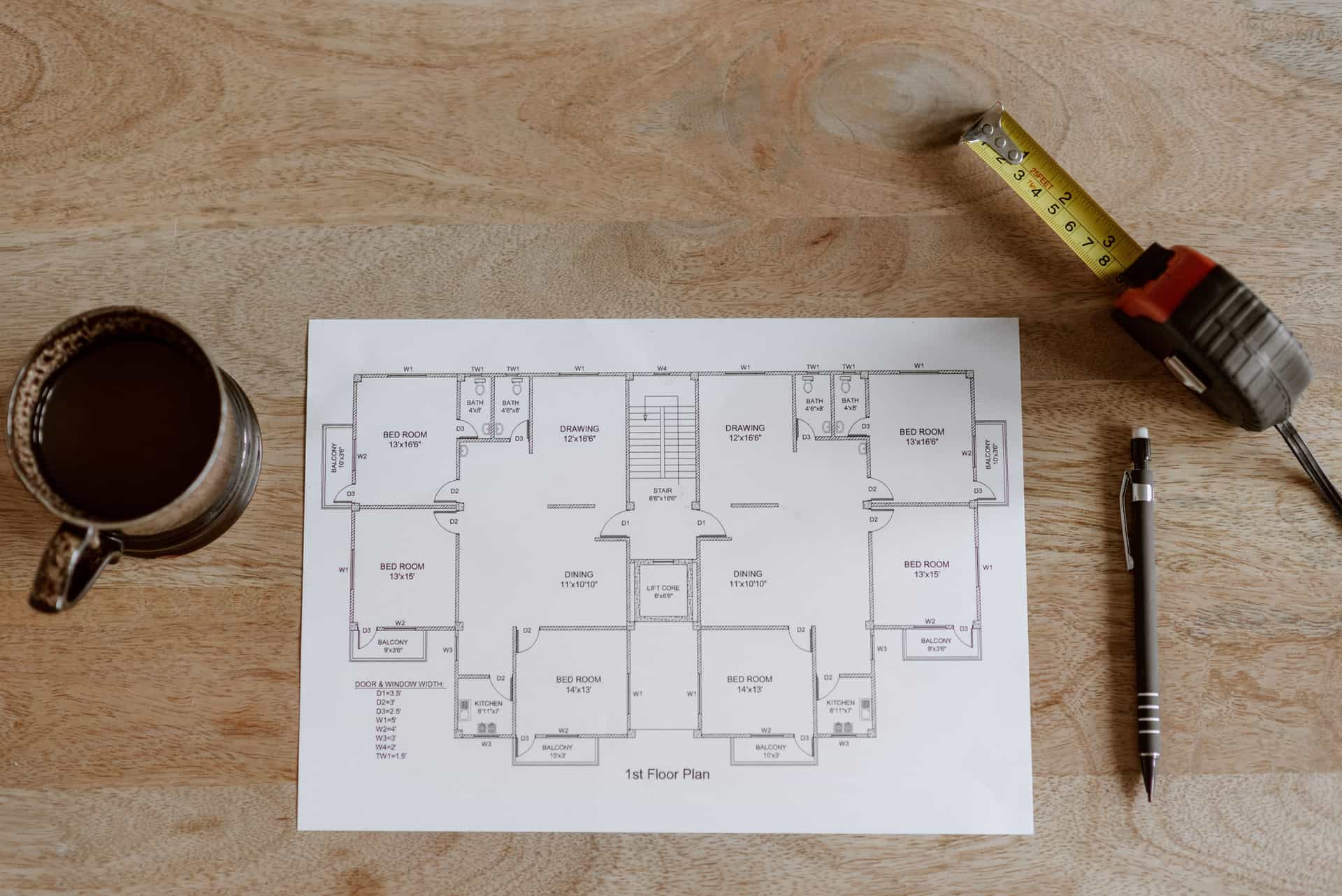
Humidifier sizing chart by square footage
The sizing chart in gallons per day, by floor area and ceiling height, with a companion table of what each figure means in practice.
Brand guide
Humidifier brands, compared on what they publish
A brand-by-brand comparison built on documentation quality - which makers publish an output figure, a run time, a wattage and a filter interval, and which leave you guessing.
Top pick: Aprilaire Model 700 · 18.0 gal/day
#ad · how this is funded · price as of October 17, 2026
Without a machine
How to humidify a room without a humidifier
The DIY humidity methods measured against the one number that decides them: how many pounds of water a room needs every day. Includes the free lever that genuinely works.
Top pick: Levoit Classic 160 · 0.63 gal/day
$39.99 · 26% off
#ad · how this is funded · price as of October 17, 2026
Found a number that is wrong? Tell us and we will fix it and say so. How we pick shows every formula used on this page.