Sizing
Ideal indoor humidity in winter
Thirty to fifty percent, with a cold-weather caveat that most guidance leaves out: below freezing, your windows set the limit before your comfort does.
By Scooter M. · Published · Updated
Thirty to fifty percent relative humidity is the band nearly every authority converges on, and unusually for this category the agreement is real rather than copied. It has a hard upper bound with a specific reason behind it, a softer lower bound, and a cold-weather exception that most winter humidity advice omits entirely.
The upper bound is not a preference
The EPA's guidance on home humidifiers states it plainly: do not humidify to indoor relative humidity levels exceeding 50 percent, because higher levels encourage the growth of biological organisms. That is dust mites, mold and mildew, and it is the reason the ceiling is a ceiling rather than a comfort suggestion.
It is also why we size every recommendation on this site to hold a target rather than to maximize output. A humidifier that can push a room to 65 percent is not a better humidifier; it is a machine capable of causing the exact problem you would otherwise be paying it to prevent.
The lower bound is about you, not the building
Below roughly 30 percent is where the familiar winter complaints start: dry nasal passages, chapped lips, static shocks off door handles, and a scratchy throat in the morning. It is also where wooden furniture, floors and instruments begin to shrink and check.
One group of occupants wants considerably more than this band allows. Tropical houseplants are described by extension services as thriving between 70 and 80 percent, which is well above the EPA's ceiling for a room people live in. That conflict is real and it is worked through on best humidifiers for plants - the short version is that you humidify a plant zone rather than a house, and you watch the windows while you do it.
The lower bound is softer than the upper one because the consequences are gradual and reversible. Nobody's house is damaged by an afternoon at 28 percent. Two months at 20 percent is a different matter, and it is what an unhumidified house in a cold climate genuinely does in midwinter.
The cold-weather caveat
Here is the part most winter humidity advice leaves out. In cold weather the practical ceiling is not 50 percent, it is whatever your coldest surface will tolerate before water condenses on it. That surface is almost always a window.
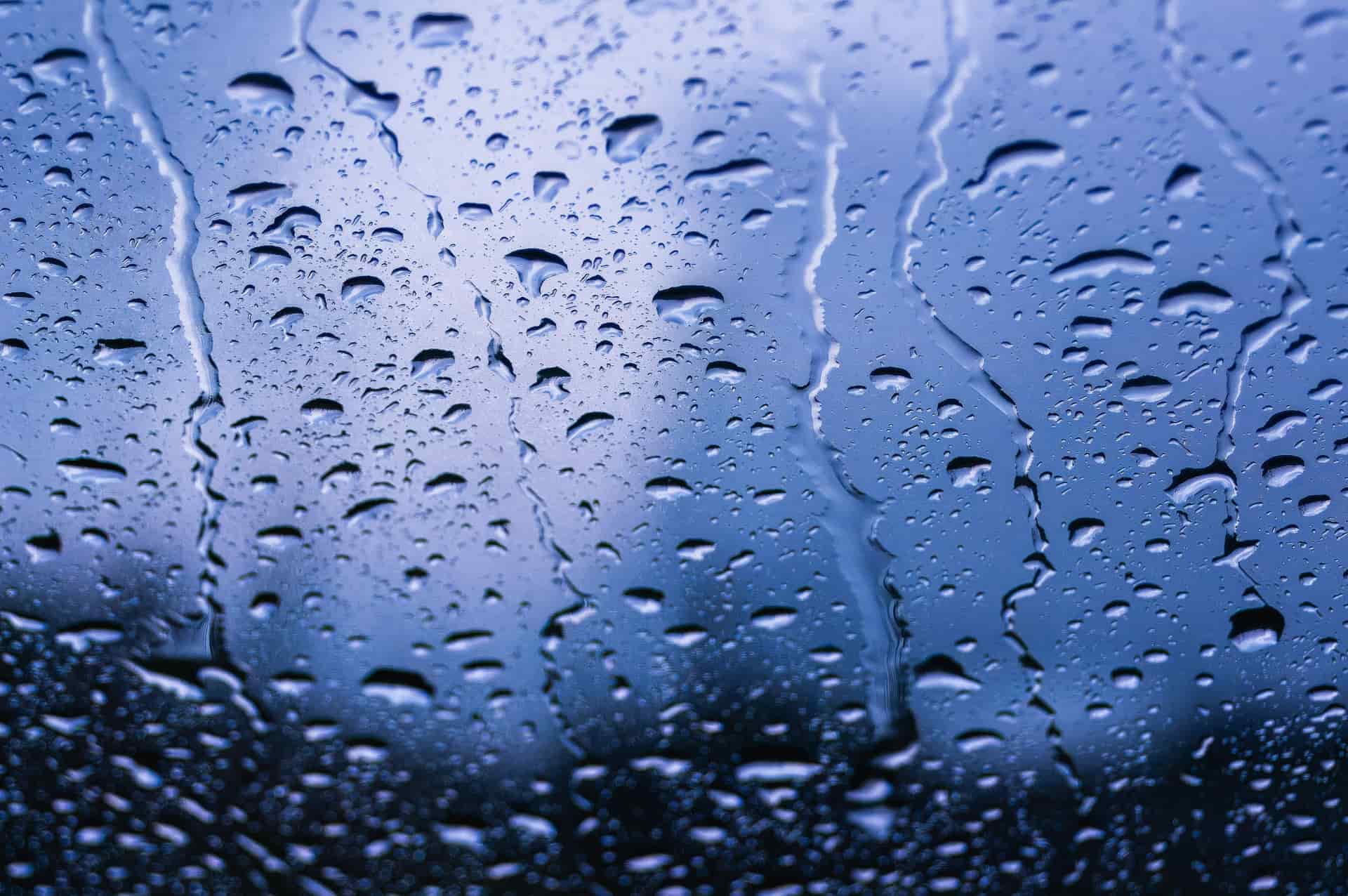
Warm indoor air holding 45 percent relative humidity meets a single-glazed pane at near-outdoor temperature, is chilled below its dew point, and drops its water onto the glass and the frame. Run it long enough and the water sits in the frame, and that is a mold problem you built deliberately. The colder it gets outside, the lower the indoor humidity you can hold without this happening, and the effect is strongest on the worst glazing.
| What you observe | What it means | What to do |
|---|---|---|
| No condensation, hygrometer 40-50% | You are in the band and your glazing can take it | Nothing. This is the target. |
| Light misting at the bottom of the glass in the morning | You are at the edge of what the glazing tolerates overnight | Drop the target 5 points and see whether it clears |
| Water running down the glass, damp frames | Well past the limit for this outdoor temperature | Turn the humidifier down now and dry the frames. This is how window mold starts. |
| Hygrometer under 30%, no condensation, static shocks | Under-humidified | Raise the target, or check whether the unit is sized for the room |
The general shape of the relationship is well established in the HVAC engineering literature: the limiting indoor relative humidity for no condensation falls as outdoor temperature falls, and rises with better glazing. ASHRAE publishes tables for it. We have not reproduced specific figures here because we could not extract them from the source document we located, and we would rather point you at the principle you can verify on your own glass than at a number we could not check.
Why the number drifts down in a heated house
This is the mechanism behind the whole category and it is worth understanding once. Relative humidity is relative to temperature. Cold outdoor air at 20F and 70 percent relative humidity contains very little water in absolute terms. Bring that air inside, heat it to 70F, and the amount of water in it has not changed - but the amount it could hold has risen enormously, so the relative figure collapses.
That is why houses get dry in winter and why the dryness tracks the heating rather than the weather. It is also why the problem is worse in a well-heated house than a cool one, and why turning the thermostat down a couple of degrees genuinely does raise indoor relative humidity without adding a drop of water.
What this means for buying
- Size to hold 40 percent, not to reach 60. Use the sizing chart and buy the machine that meets your number, not the largest one in the aisle.
- Prefer a unit with a real humidistat that switches off at a target rather than running continuously. An evaporative unit is partly self-limiting by physics, which is a genuine safety margin.
- Buy a separate hygrometer and put it across the room from the humidifier.
- Watch the windows for the first week. They will tell you your house's real ceiling faster than any table can.
Questions people actually ask
What is the ideal humidity level in a house in winter?
Between 30 and 50 percent relative humidity. The EPA states that you should not humidify above 50 percent because higher levels encourage biological growth. In cold weather the practical ceiling is often lower than 50, because condensation will appear on cold window glass before you reach it.
What is the best humidity level for a bedroom in winter?
The same 30 to 50 percent band, and towards the middle of it. A bedroom is where dry air is most noticeable overnight and it is also usually the coolest room, so it condenses at a lower humidity than the rest of the house. If you wake up to misted windows, drop the target by five points.
Why do my windows fog up when I run a humidifier?
Because the glass is colder than the dew point of the air in the room. Warm humid air touching cold glass drops its moisture onto the surface. It means you are above the practical ceiling for your glazing at that outdoor temperature, and it is worth acting on: water sitting in a window frame all winter is a mold problem.
Can indoor humidity be too high?
Yes. Above 50 percent you are creating conditions for dust mites, mold and mildew, which is exactly what the EPA's humidifier guidance warns against. High indoor humidity in cold weather also drives condensation inside wall cavities, which does damage you cannot see.
Does turning the heating down raise humidity?
It raises relative humidity, yes, without adding any water. Relative humidity is measured against how much moisture the air could hold at that temperature, and cooler air can hold less, so the same absolute moisture reads as a higher percentage. It is why a well-heated house feels drier than a cool one.
Sources
Every figure on this page came from one of the documents below, read on the date shown. We do not cite other review sites, forum posts or video reviews as sources of fact.
- US Environmental Protection Agency - Use and Care of Home Humidifiers (relative humidity ceiling, three-day cleaning interval, low-mineral water, microorganism warning)
- ASHRAE Handbook - HVAC Systems and Equipment, Chapter 22: Humidifiers (the engineering reference for humidification load and window-condensation limits)
Read next
We earn a commission if you buy through the links on this page, at no extra cost to you. It does not change what we recommend or the order the picks appear in. Full disclosure. Prices checked October 16, 2026.
Humidifier sizing, in gallons per day
What size humidifier you need, derived from manufacturer figures and shown as arithmetic you can redo. Includes the calculator and the ceiling-height correction.

White dust: your water, made airborne
What white dust is, why only ultrasonic and impeller units produce it, and the three fixes ranked by how well they work.

The type decision
Evaporative vs ultrasonic
The evaporative-versus-ultrasonic decision, settled on white dust and filter cost rather than on mist visibility.
Top pick: Vornado Evap40 · 4.0 gal/day
#ad · how this is funded · price as of October 16, 2026
Best for allergies
Best humidifiers for allergy sufferers
Allergy picks ranked on the ability to hold a target and stop - because above 50% relative humidity a humidifier starts feeding dust mites and mold rather than helping.
Top pick: Honeywell HCM350 Germ Free Cool Moisture · 1.0 gal/day
#ad · how this is funded · price as of October 16, 2026
Best for a guitar room
Best humidifiers for a guitar room
Room humidifiers for instruments, chosen against what guitar makers actually publish: a 45-55% target, a warning about going above 60, and a warranty that does not cover humidity damage.
Top pick: Honeywell HCM350 Germ Free Cool Moisture · 1.0 gal/day
#ad · how this is funded · price as of October 16, 2026
Best for static
Best humidifiers for static electricity
Picks for the whole-space dryness that causes static shocks, with the mechanism, the humidity band worth aiming at, and an honest note on the threshold number other sites print and nobody publishes.
Top pick: Vornado Evap40 · 4.0 gal/day
#ad · how this is funded · price as of October 16, 2026
Found a number that is wrong? Tell us and we will fix it and say so. How we pick shows every formula used on this page.