Cost
Are humidifiers worth it?
Sometimes. The answer depends on three things you can check before buying, and on one cost almost nobody counts - the twenty minutes a week the machine asks for and most people never give it.
By Scooter M. · Published · Updated
We earn a commission if you buy through the links on this page, at no extra cost to you. It does not change what we recommend or the order the picks appear in. Full disclosure. Prices checked October 13, 2026.
| # | Product | Best for | Gal/day | Price |
|---|---|---|---|---|
| 1 | 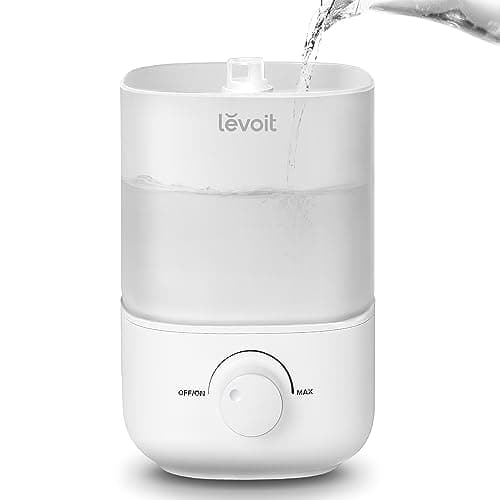 Levoit Classic 160Top pick2.5 liters, 17 watts, and a base with no hard-to-reach corners. The smallest honest recommendation here, and the only one whose maker declines to claim a coverage figure at all. | A desk, a nursery corner, a small bedroom | 0.63implied · 188 sq ft | |
| 2 | 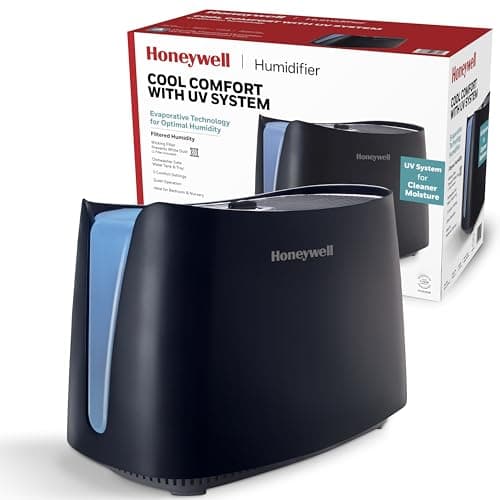 Honeywell HCM350 Germ Free Cool MoistureA break-resistant, dishwasher-safe tank and a wide opening. It is the only unit here designed so the hardest part of ownership is easy. | Cleaning, without qualification | 1.0implied · 296 sq ft | |
| 3 | 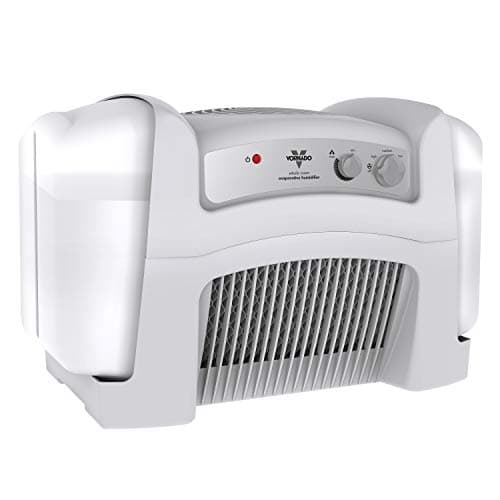 Vornado Evap40Vornado publishes an output figure and a coverage figure, and the two agree. Four gallons a day covers about 1,180 sq ft at our derived rate against a 1,000 sq ft claim. | The only coverage claim here the arithmetic supports | 4.0published · 1,184 sq ft | |
| 4 | 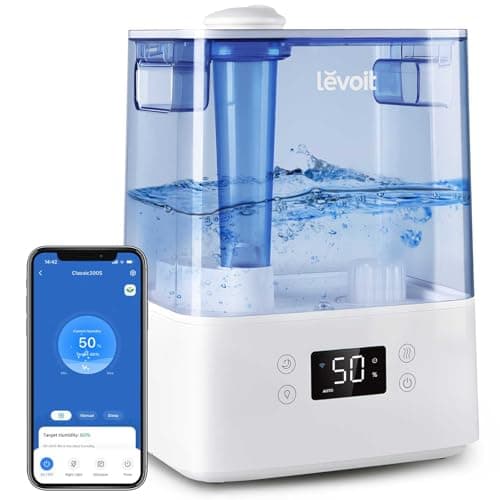 Levoit Classic 300SA 6-liter tank, a genuinely wide top-fill opening and no filter to buy. Its own numbers describe a 190 sq ft machine, not the 505 sq ft on the box. | A bedroom you refill twice a week | 0.63implied · 187 sq ft |

Most pages answering this question are written by people who want you to buy one. This site earns a commission when you do, so take the same view of ours - and then check the arithmetic, which is the part that does not care who wrote it.
Our honest answer: for a specific set of situations, yes, clearly. For a couple of others, no. And there is a third category - the largest one - where it depends entirely on whether you will do the maintenance, which is a question about you rather than about the machine.
We earn a commission if you buy through the links on this page, at no extra cost to you. It does not change what we recommend or the order the picks appear in. Full disclosure. Prices checked October 13, 2026.
| # | Product | Best for | Gal/day | Price |
|---|---|---|---|---|
| 1 | Levoit Classic 160Top pick2.5 liters, 17 watts, and a base with no hard-to-reach corners. The smallest honest recommendation here, and the only one whose maker declines to claim a coverage figure at all. | A desk, a nursery corner, a small bedroom | 0.63implied · 188 sq ft | |
| 2 | Honeywell HCM350 Germ Free Cool MoistureA break-resistant, dishwasher-safe tank and a wide opening. It is the only unit here designed so the hardest part of ownership is easy. | Cleaning, without qualification | 1.0implied · 296 sq ft | |
| 3 | Vornado Evap40Vornado publishes an output figure and a coverage figure, and the two agree. Four gallons a day covers about 1,180 sq ft at our derived rate against a 1,000 sq ft claim. | The only coverage claim here the arithmetic supports | 4.0published · 1,184 sq ft | |
| 4 | Levoit Classic 300SA 6-liter tank, a genuinely wide top-fill opening and no filter to buy. Its own numbers describe a 190 sq ft machine, not the 505 sq ft on the box. | A bedroom you refill twice a week | 0.63implied · 187 sq ft |
What it actually costs to own
A humidifier has four costs and the purchase price is usually the smallest one across five years. Here is the full shape of it.
| Cost | How it is computed | Can you compute it upfront? |
|---|---|---|
| Purchase | One-off | Yes - live on the page, dated |
| Electricity | watts x hours x days x tariff | Only where the maker publishes wattage |
| Consumables | seasons / interval x price | The count usually; the price no |
| Your time | about 20 minutes a week | Yes, and almost nobody does |
The electricity figure is the one that surprises people, because it depends almost entirely on whether the machine heats water.
When it is clearly worth it
Three situations, and in each one the case rests on something measurable rather than on how the air feels.
- Your hygrometer reads below 30 percent. This is the only genuinely objective trigger. The EPA's band is 30 to 50 percent relative humidity, and a house sitting at 22 percent in January is outside it. Measure before you buy - a hygrometer costs a fraction of a humidifier and it is the instrument that tells you whether you have a problem at all.
- You have wooden instruments, floors or furniture. Wood moves with moisture content, and the cost of the damage is measured in hundreds or thousands rather than in comfort. Hardwood floors covers what the flooring industry actually specifies.
- You have houseplants that need more than a mist bottle. Extension services are clear that misting and pebble trays do not meaningfully raise humidity, and tropical species want 40 to 60 percent or higher - see plants.
In each of those the humidifier is solving a defined problem with a checkable target. That is the shape of a purchase worth making.
When it is not worth it
We would rather lose the sale than have you buy one of these and be disappointed, so here are the three cases plainly.
- You have not measured, and the house might be fine. Plenty of homes sit comfortably inside the band all winter. Buying a humidifier for a house at 42 percent adds a cleaning chore and a running cost and solves nothing - and pushing past 50 makes things worse rather than better.
- You want to humidify a whole large house with one plug-in unit. A 2,400 square foot house needs roughly 8 gallons a day at our derived rate, and the largest portable humidifier we cover publishes 4. This is the most common disappointment in the category and it is arithmetic, not brand choice.
- You know you will not clean it. This is the honest one. A neglected humidifier is not a neutral object that stops helping - the EPA is explicit that a dirty one can disperse microorganisms into the air. If the twenty minutes a week is not going to happen, the machine is a liability rather than a waste of money.
The five-year number
Take a mid-range cool-mist unit run eight hours a night through five heating seasons. Electricity is the only cost here we can compute in full, and it comes to roughly $23 to $37 across those five seasons at the national average rate - which is less than most people expect and far less than the purchase price.
Consumables are where the ranking changes. A filtered unit on a 45-day interval consumes four filters a season, or twenty across five years. A ducted Aprilaire on its maintenance schedule uses one Water Panel a year, or five. That is a fourfold difference in consumable count between two machines that both humidify, and it swamps the electricity difference entirely. The full workings are on the five-year total.
We do not print consumable prices because our live price layer tracks the machines we feature rather than what they eat. The multiplier is the part that is genuinely ours - take today's price for your filter, multiply by the count, and you have the number.
The decision, as a sequence
- Measure first. A hygrometer, for a week, before spending anything. Below 30 percent is a problem; inside the band is not.
- Work out the gallons per day your space needs from the sizing chart - not the room label on the box.
- Check that against real output figures, published or implied from the maker's own tank and run time. Most published coverage claims do not survive this step.
- Decide honestly about the cleaning, and if the answer is no, buy for cleanability rather than capacity.
- Then, and only then, look at price.
If step one says your house is at 40 percent, stop at step one. That is a perfectly good outcome and it costs you the price of a hygrometer.
The picks, in full
Top pick · A desk, a nursery corner, a small bedroom
Levoit Classic 160
2.5 liters, 17 watts, and a base with no hard-to-reach corners. The smallest honest recommendation here, and the only one whose maker declines to claim a coverage figure at all.
This is the only unit in the set where you can compute both ends of the range from published figures, because Levoit gives run times for minimum and maximum. 0.66 gallons over 25 hours is 0.63 a day; the same tank over 11 hours is 1.44 a day. At our derived rate that is roughly 188 to 427 square feet, and the honest way to state its coverage is exactly that: a range, with the setting attached.
Notice what Levoit did not do here: it did not put a square-footage number on the box. Given that every other model in its own line carries one that its published figures cannot support, declining to claim one on the smallest unit reads as restraint rather than an omission.
17 watts is the lowest draw in this set by a factor of one and a half, and the flat base with a wide opening is the single design decision that most reliably predicts whether a humidifier gets cleaned.
What works
- Run time published at both minimum and maximum, so the output range can be computed
- 17 W is the lowest rated draw here
- Levoit publishes its own descaling procedure, including the soak time
What does not
- 2.5 L means daily refills at anything above the lowest setting
- No published coverage figure, so you have to do the arithmetic yourself
- Ultrasonic, so the white-dust caveat applies
Skip this ifthe room is larger than a small bedroom. At maximum mist this empties in eleven hours and still only reaches the low four hundreds of square feet.
The arithmetic
- Implied output (minimum mist)
- 0.63 gal/day
- Covers, at 296 sq ft per gal/day
- 188 sq ft
Output derived as tank capacity divided by published run time, times 24. Coverage rate derived from Aprilaire’s own published capacity-and-coverage pairs.
Published specification
- Tank
- 2.5 LAbout 0.66 US gallonsSource
- Output/day
- not published
- Coverage
- not publishedLevoit publishes no square-footage claim for this model, which is more honest than most
- Run time
- Up to 25 h low, up to 11 h maxBoth ends published, which lets you compute the rangeSource
- Power
- 17 WSource
- Noise
- Under 28 dB at maximum mistSource
- Filter
- Pre-installed water filter spongeSource
- Cleaning
- Wide opening, no hard-to-reach corners in the baseLevoit's stated descaling method is a cup of white vinegar and water for 20 to 30 minutesSource
$39.99 · 26% off
#ad · how this is funded · price as of October 13, 2026
Pick 2 · Cleaning, without qualification
Honeywell HCM350 Germ Free Cool Moisture
A break-resistant, dishwasher-safe tank and a wide opening. It is the only unit here designed so the hardest part of ownership is easy.
One gallon over 24 hours is one gallon a day, which at our derived rate is about 296 square feet. Honeywell says medium room. Those two statements agree, which is a low bar that most of this category fails to clear.
The reason to buy it is the tank. Dishwasher-safe and break-resistant, with an opening wide enough to actually reach inside, against an EPA instruction to clean every third day. A humidifier you will genuinely clean twice a week beats a larger one you will clean twice a winter, and this is the only unit here whose maker treats that as a design requirement rather than a footnote.
There is one inconsistency worth naming. The specification table on Honeywell's own page says a 1 gallon tank; the feature copy a few hundred pixels above it says 1.1 gallons. It is a small discrepancy and it is on the maker's own page, which is a fair illustration of why we quote the table and say which one we took.
What works
- Dishwasher-safe, break-resistant tank with a wide opening, which is the whole ballgame for maintenance
- The wicking filter captures minerals, so no white dust regardless of your water
- The published tank and run time are consistent with the room size claimed
What does not
- HAC504 wicks are a recurring cost with no interval published on the product page
- One gallon a day is a bedroom, not a floor of a house
- The maker's own page states two different tank capacities
Skip this ifyou need to humidify an open-plan living space. This is a one-room machine and its own figures say so.
The arithmetic
- Implied output (continuous)
- 1.0 gal/day
- Covers, at 296 sq ft per gal/day
- 296 sq ft
Output derived as tank capacity divided by published run time, times 24. Coverage rate derived from Aprilaire’s own published capacity-and-coverage pairs.
Published specification
- Tank
- 1 galHoneywell's own specification table says 1 gallon; the marketing copy on the same page says 1.1. We quote the table.Source
- Output/day
- not publishedTank and run time only
- Coverage
- Medium roomHoneywell publishes a size class rather than a number. Its published tank and run time imply about 1 gallon per day, or roughly 296 sq ft at our derived rate.Source
- Run time
- Up to 24 hSource
- Power
- not published
- Filter
- HAC504 Filter AOne included. Honeywell states its own filters should be used.Source
- Cleaning
- Dishwasher safe, break resistant tank, wide openingHoneywell's own wording. It also states the wicking filter removes impurities from the water, reducing white dust.Source
#ad · how this is funded · price as of October 13, 2026
Pick 3 · The only coverage claim here the arithmetic supports
Vornado Evap40
Vornado publishes an output figure and a coverage figure, and the two agree. Four gallons a day covers about 1,180 sq ft at our derived rate against a 1,000 sq ft claim.
Run the check that fails everywhere else on this page and it passes here. Four gallons a day at 296 square feet per gallon per day is about 1,180 square feet of coverage, against a claim of 1,000. Vornado left itself margin instead of taking it.
It passes because it is evaporative. A wick and a fan can only put as much water into the air as the air will accept, which is why an evaporative unit self-limits near 50% relative humidity and why it cannot produce white dust: the minerals stay in the wick. The EPA's guidance to use low-mineral water exists mainly because ultrasonic and impeller units disperse what is dissolved in the tank, and this design does not.
The cost of that is the wick. Two of them, on a schedule Vornado does not publish, which is the recurring bill an ultrasonic unit does not have. Whether that trade is worth it is arithmetic, and it is worked through in full on our filter-cost page.
What works
- Publishes an output figure, and the coverage claim survives being checked against it
- Evaporative, so it cannot produce white dust and self-limits near a safe humidity
- Five-year warranty, the longest published here
What does not
- Two wicks to replace on an interval Vornado does not publish
- A fan moving air across a wet wick is audible, and no dB figure is published
- No rated wattage published
Skip this ifyou want silence. Every evaporative unit is a fan, and Vornado publishes no noise figure for this one.
The arithmetic
- Published output (continuous on high)
- 4.0 gal/day
- Covers, at 296 sq ft per gal/day
- 1,184 sq ft
- Maker’s coverage claim
- 1,000 sq ft
- Output that claim would need
- 3.4 gal/day
Output as the manufacturer publishes it. Coverage rate derived from Aprilaire’s own published capacity-and-coverage pairs.
Published specification
- Tank
- 4 galSource
- Output/day
- Up to 4 galVornado's wording: up to a 4 gallon water output when operated continuously on highSource
- Coverage
- Up to 1,000 sq ftSupported by its own published output. This is the only unit in the set where that is true.Source
- Run time
- not publishedVornado publishes output instead, which is more useful
- Power
- not published
- Filter
- Two humidifying wicksTwo are supplied, one front and one rear. No replacement interval is published.Source
- Cleaning
- Vornado states easy to clean and operateSource
#ad · how this is funded · price as of October 13, 2026
Pick 4 · A bedroom you refill twice a week
Levoit Classic 300S
A 6-liter tank, a genuinely wide top-fill opening and no filter to buy. Its own numbers describe a 190 sq ft machine, not the 505 sq ft on the box.
The interesting number is not 6 liters, it is 60 hours. A 1.58-gallon tank that lasts 60 hours on low is moving 0.63 gallons of water a day, and 0.63 gallons a day is what covers about 187 square feet at the rate we derive from Aprilaire's own published sizing. That is a bedroom. It is not the 505 square feet on the specification table.
Both figures are true and they describe different settings. Levoit publishes the endurance of the quietest setting and the ceiling of the loudest, and never the output that connects them, so a buyer has no way to check the coverage claim. That is not a Levoit problem, it is a category problem, and it is the reason every roundup here shows the implied figure beside the claimed one.
What you are actually buying is the absence of a filter. No wick means no 30-to-60-day replacement cycle and no annual filter bill, and it also means every mineral in your tap water leaves the machine as white dust or stays behind as scale. Run low-mineral water or accept the descaling, which the EPA's own humidifier guidance is blunt about.
What works
- No wick or replacement filter, so the running cost after purchase is water and 26 watts
- 26 W is genuinely low: at the June 2026 US average tariff a full heating season of overnight running is a few dollars
- The top-fill opening is wide enough to get a hand and a brush inside, which is most of what makes a humidifier easy to keep clean
What does not
- The 505 sq ft coverage claim cannot be reconciled with the published tank and run time
- Ultrasonic, so hard water becomes airborne white dust unless you use low-mineral water
- Levoit publishes no gallons-per-day figure at any setting
Skip this ifyour water is hard and you will not commit to distilled. An ultrasonic unit atomizes whatever is dissolved in the tank, and this one has no wick to catch it.
The arithmetic
- Implied output (low mist)
- 0.63 gal/day
- Covers, at 296 sq ft per gal/day
- 187 sq ft
- Maker’s coverage claim
- 505 sq ft
- Output that claim would need
- 1.7 gal/day
Output derived as tank capacity divided by published run time, times 24. Coverage rate derived from Aprilaire’s own published capacity-and-coverage pairs.
Published specification
- Tank
- 1.58 gal / 6 LSource
- Output/day
- not publishedLevoit publishes tank size and low-setting run time, not gallons per day
- Coverage
- 215-505 sq ft / 20-47 m2Levoit's own figure. Its published tank and run time imply roughly 187 sq ft at our derived rate.Source
- Run time
- Up to 60 hOn the low mist settingSource
- Power
- 26 WAC 120 V, 60 HzSource
- Noise
- 30 dB or lessSource
- Filter
- None requiredA water filter sponge is included and descaling pads are sold separately, but there is no wick to replaceSource
- Cleaning
- Top-fill opening, brush includedLevoit's own wording: refill without flipping the tank overSource
#ad · how this is funded · price as of October 13, 2026
Questions people actually ask
Are humidifiers worth the money?
If your hygrometer reads below the EPA's 30 to 50 percent band, or you have wood or plants to protect, yes - the running cost is small, roughly $7 a season in electricity for a cool-mist unit at the national average rate. If you have not measured, or you will not clean it every third day, no.
How much does it cost to run a humidifier?
It depends almost entirely on whether it heats the water. A 26 W cool-mist unit run eight hours a night for a 182-day season is about $6.94 in electricity at 18.34 cents per kilowatthour. The same season on a 280 W warm-mist unit is about $74.77. Filters are usually the larger cost on a filtered unit.
Is it bad to use a humidifier every night?
The usage is not the issue; the maintenance that goes with it is. The EPA's guidance is to empty and dry the tank daily and clean every water-contact surface every third day, and nightly use means that schedule applies all season. A humidifier that runs every night and is cleaned monthly is the failure case.
Do I really need a humidifier?
Measure before deciding. A hygrometer costs a fraction of a humidifier and answers the question directly: below 30 percent relative humidity you are outside the EPA's band and have something to fix, inside it you do not. Plenty of houses sit comfortably in the band all winter.
What is the downside of a humidifier?
Three real ones. It needs cleaning every third day or it can disperse microorganisms into the air. It can overshoot past 50 percent, which encourages mold and dust mites and puts condensation on cold windows. And on hard water an ultrasonic unit produces white dust, which is a chore you did not have before.
Sources
Every figure on this page came from one of the documents below, read on the date shown. We do not cite other review sites, forum posts or video reviews as sources of fact.
- US Environmental Protection Agency - Use and Care of Home Humidifiers (relative humidity ceiling, three-day cleaning interval, low-mineral water, microorganism warning)
- US Energy Information Administration - Electric Power Monthly, Table 5.3: average residential price 18.34 cents per kilowatthour, United States, June 2026
- AHRI Guideline F - Selection, Installation and Servicing of Residential Humidifiers (the residential sizing standard; ahrinet.org returned HTTP 403 to this build, so we cite it as the governing document without paraphrasing text we did not read)
- Levoit Classic 160 - manufacturer spec page (retrieved September 1, 2026)
- Honeywell HCM350 - manufacturer spec page (retrieved September 1, 2026)
- Vornado Evap40 - manufacturer spec page (retrieved September 1, 2026)
- Levoit Classic 300S - manufacturer spec page (retrieved September 1, 2026)
Read next

Five-year cost
The five-year total
A five-year cost-of-ownership framework with the electricity computed, the consumable multipliers derived, and the gaps named rather than filled.
Top pick: Levoit Classic 300S · 0.63 gal/day
#ad · how this is funded · price as of October 13, 2026
Running cost
How much a humidifier costs to run
Season electricity costs for every unit in our set, computed at the EIA's published US average residential rate.
Top pick: Levoit Classic 160 · 0.63 gal/day
$39.99 · 26% off
#ad · how this is funded · price as of October 13, 2026
Humidifier sizing chart by square footage
The sizing chart in gallons per day, by floor area and ceiling height, with a companion table of what each figure means in practice.
Easiest to clean
The humidifiers that are easiest to clean
Units designed around the maintenance problem: dishwasher-safe parts, wide openings and drying cycles, on published manufacturer features.
Top pick: Honeywell HCM350 Germ Free Cool Moisture · 1.0 gal/day
#ad · how this is funded · price as of October 13, 2026
Without a machine
How to humidify a room without a humidifier
The DIY humidity methods measured against the one number that decides them: how many pounds of water a room needs every day. Includes the free lever that genuinely works.
Top pick: Levoit Classic 160 · 0.63 gal/day
$39.99 · 26% off
#ad · how this is funded · price as of October 13, 2026
Found a number that is wrong? Tell us and we will fix it and say so. How we pick shows every formula used on this page.