Cost
How much does a humidifier cost?
A bedside unit is an under-$50 purchase, most rooms are served in the $50 to $150 band, a large-room machine runs $200 to $300, and a ducted whole-house unit is a few hundred for the equipment before an installer quotes you.
By Scooter M. · Published · Updated
We earn a commission if you buy through the links on this page, at no extra cost to you. It does not change what we recommend or the order the picks appear in. Full disclosure. Prices checked October 29, 2026.
| # | Product | Best for | Gal/day | Price |
|---|---|---|---|---|
| 1 | 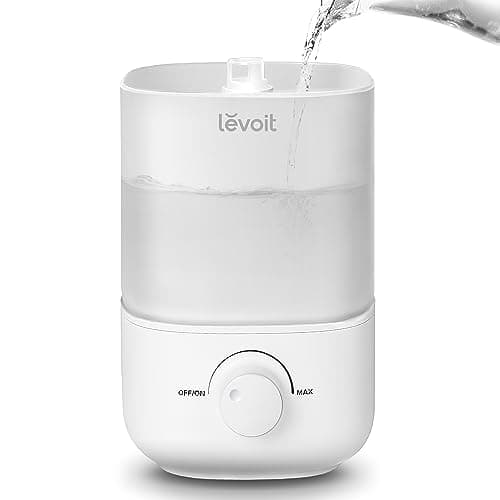 Levoit Classic 160Top pick2.5 liters, 17 watts, and a base with no hard-to-reach corners. The smallest honest recommendation here, and the only one whose maker declines to claim a coverage figure at all. | A desk, a nursery corner, a small bedroom | 0.63implied · 188 sq ft | |
| 2 | 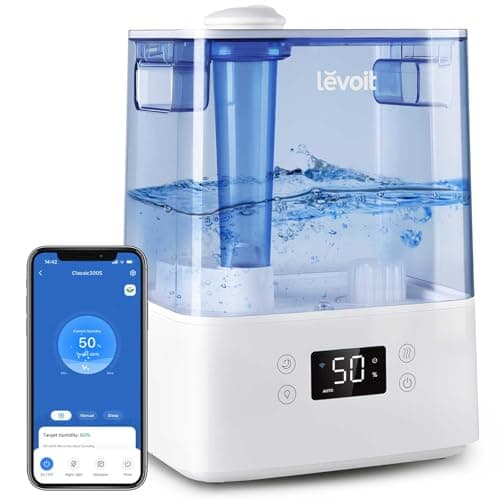 Levoit Classic 300SA 6-liter tank, a genuinely wide top-fill opening and no filter to buy. Its own numbers describe a 190 sq ft machine, not the 505 sq ft on the box. | A bedroom you refill twice a week | 0.63implied · 187 sq ft | |
| 3 | 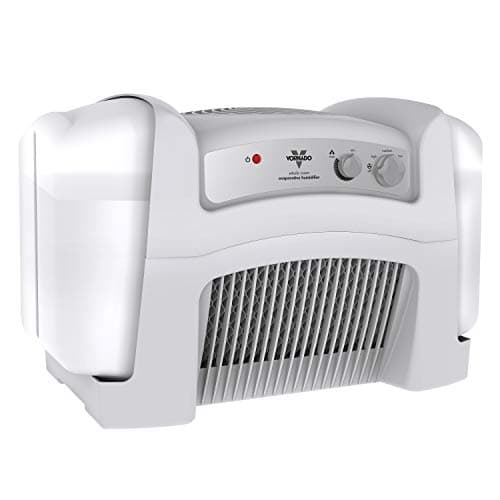 Vornado Evap40Vornado publishes an output figure and a coverage figure, and the two agree. Four gallons a day covers about 1,180 sq ft at our derived rate against a 1,000 sq ft claim. | The only coverage claim here the arithmetic supports | 4.0published · 1,184 sq ft | |
| 4 | 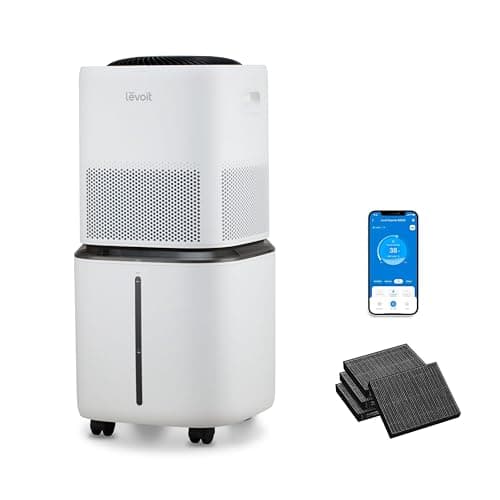 Levoit Superior 6000SSix gallons, evaporative, and a Dry Mode that dries the wicks between runs. The 3,000 sq ft claim needs five times the output its own run time implies. | Mist-free humidification with a drying cycle | 2.0implied · 592 sq ft | |
| 5 | 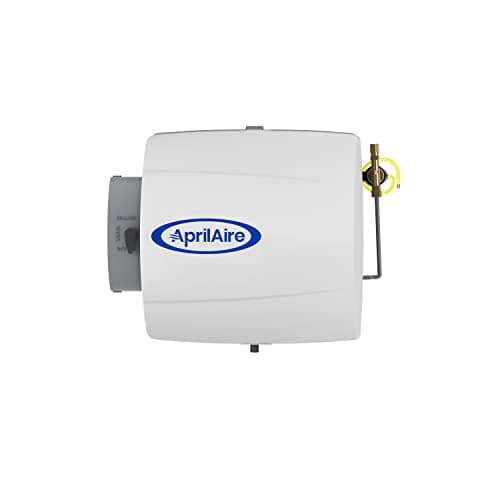 Aprilaire Model 500Twelve gallons a day against a stated 3,600 sq ft, on the same published basis as the 700. It is the bypass design, which means it borrows the furnace blower instead of bringing its own fan. | A ducted house, without the fan-powered price | 12.0published · 3,552 sq ft |
Four brackets cover almost every portable humidifier worth owning. A small bedside ultrasonic unit is an under-$50 purchase. The mainstream band - a four-to-six-liter tabletop machine, or a one-gallon evaporative one - runs from about $50 to $150, and that is where most buyers correctly land. A large-room or premium evaporative machine is $200 to $300. A ducted whole-house humidifier is a few hundred dollars for the equipment, plus an installer's quote that we will not estimate for you.
Every one of those is a bracket, not a price. The live figure for each machine we cover is in the table above, refreshed daily and stamped with the date it was read, because a price typed into a sentence is wrong within a week. What this page is for is the thing a price tag does not tell you: what changes as you move up the brackets, and why the purchase price turns out to be the smallest of the four numbers you will actually pay.
We earn a commission if you buy through the links on this page, at no extra cost to you. It does not change what we recommend or the order the picks appear in. Full disclosure. Prices checked October 29, 2026.
| # | Product | Best for | Gal/day | Price |
|---|---|---|---|---|
| 1 | Levoit Classic 160Top pick2.5 liters, 17 watts, and a base with no hard-to-reach corners. The smallest honest recommendation here, and the only one whose maker declines to claim a coverage figure at all. | A desk, a nursery corner, a small bedroom | 0.63implied · 188 sq ft | |
| 2 | Levoit Classic 300SA 6-liter tank, a genuinely wide top-fill opening and no filter to buy. Its own numbers describe a 190 sq ft machine, not the 505 sq ft on the box. | A bedroom you refill twice a week | 0.63implied · 187 sq ft | |
| 3 | Vornado Evap40Vornado publishes an output figure and a coverage figure, and the two agree. Four gallons a day covers about 1,180 sq ft at our derived rate against a 1,000 sq ft claim. | The only coverage claim here the arithmetic supports | 4.0published · 1,184 sq ft | |
| 4 | Levoit Superior 6000SSix gallons, evaporative, and a Dry Mode that dries the wicks between runs. The 3,000 sq ft claim needs five times the output its own run time implies. | Mist-free humidification with a drying cycle | 2.0implied · 592 sq ft | |
| 5 | Aprilaire Model 500Twelve gallons a day against a stated 3,600 sq ft, on the same published basis as the 700. It is the bypass design, which means it borrows the furnace blower instead of bringing its own fan. | A ducted house, without the fan-powered price | 12.0published · 3,552 sq ft |
The brackets, and what changes between them
| Bracket | What the machine is | What it will genuinely cover | What you give up |
|---|---|---|---|
| Under $50 | A small ultrasonic tabletop unit, 2 to 3 liters, no filter | One small bedroom - roughly 150 to 200 sq ft on its own published figures | Capacity, a humidistat, and any published noise or output data worth the name |
| $50 to $150 | A 4 to 6 L ultrasonic, or a 1-gallon evaporative, often with an app and a humidity target | A bedroom or a modest living room - about 190 to 300 sq ft implied | Room size. Nothing in this band reaches an open-plan floor, whatever the box says |
| $100 to $150 | A larger reservoir, a warm-mist option, or a mini-console evaporative | A large bedroom, or a living room if you keep the door shut - 300 to 500 sq ft | Either the electricity, if it heats water, or the published data, if the maker gives none |
| $200 to $300 | A multi-gallon evaporative machine, or a design-led unit built around cleanability | A large room or a small open-plan space - 500 to 1,200 sq ft, depending on which one | Portability, in practice. These are floor machines, not nightstand machines |
| A few hundred, plus installation | A ducted whole-house humidifier, plumbed in and drained to waste | A whole house - 3,600 sq ft on published figures for the smallest Aprilaire | Flexibility and simplicity. It needs ducts, water, a drain and an installer |
The column that matters is the third one, and it is the column no retailer prints. Coverage on a box is a marketing figure; the figure above is what each class of machine moves in water per day, converted at the rate we derive from the only maker that publishes capacity and coverage together. The gap between the two is routinely a factor of three, which is why people buy a "500 square foot" humidifier for a 500 square foot room and are disappointed. The sizing chart gives your own number, and why your humidifier is not raising the humidity is what happens when you skip that step.
The purchase price is the smallest of four numbers
A humidifier has four costs. Most buyers compare the first one and meet the other three later.
| Cost | Typical size across five years | Can you check it before buying? |
|---|---|---|
| Purchase | One-off, in the brackets above | Yes - live in the table above, dated |
| Electricity | $23 to $37 for cool mist; roughly ten times that for warm | Only where the maker publishes a wattage |
| Consumables | Nil on a filter-free unit; 20 wicks on a filtered one | The count usually; the price no |
| Your time | About 20 minutes a week, every week it runs | Yes, and almost nobody does |
Electricity, then, is almost never the reason to buy one humidifier over another - unless you want warm mist every night, in which case it is the whole argument. The consumable is the cost that genuinely reorders the brackets. A filtered unit on the one firm published interval we have for a wick gets through three to six of them a season, which across five years is a recurring line item that can exceed the machine. A ducted unit on an annual Water Panel schedule uses five in the same period. That is close to an order of magnitude between two machines that both humidify, and it is worked through in full on the five-year total.
We do not print consumable prices, for the same reason we do not print machine prices in prose: our live layer tracks the units we feature, not what they eat. What is genuinely ours is the multiplier. Take today's price for your filter, multiply by the count on filter replacement costs, and the number is yours rather than remembered.
What actually makes one cost more than another
Four things move the price in this category, and only two of them move the amount of water the machine puts in your room.
- Reservoir size, which is not output. This is the single most expensive misunderstanding in the category. A ten-liter tower and a six-liter tabletop unit in our set move almost exactly the same water per day - 0.62 against 0.63 gallons - because the bigger one simply runs longer. You pay more for the tower and what you buy is refill interval, which is a real thing to buy and is not capacity.
- A heater. Warm mist adds a few tens of dollars to the machine and about ten times the electricity. It also puts hot water in a unit that may stand beside a child's bed, which is the standard reason cool mist gets recommended for a nursery.
- A humidistat. A target the machine holds and stops at. This is the only feature in the category we think is worth paying a premium for, and it is routinely confused with an app that merely switches the machine on from the sofa. Best smart humidifiers separates the two.
- Cleanability, which looks like nothing on a spec sheet. A dishwasher-friendly tank with an opening wide enough for a hand is worth more over five years than any capacity figure, because the EPA's instruction is to clean every water-contact surface every third day and the machine you will still be cleaning in February is the one that survives. The humidifiers that are easiest to clean ranks on exactly this.
What you should not pay extra for
- A bigger square-footage number on the box. Unless the maker also publishes the gallons per day behind it, that figure cannot be checked and in our set it averages roughly three times what the machine's own tank and run time imply.
- A germ or antimicrobial claim as a substitute for cleaning. Read the wording carefully - the one UV claim in our set is about the water in the tank rather than the air in the room, which is a useful feature correctly scoped and is not a cleaning schedule.
- An app with no humidity target behind it. Remote on-off is a convenience. A humidistat is a safety mechanism, and they are sold at similar prices.
- A larger tank to avoid refilling, if you were going to skip the daily empty anyway. A long refill interval that becomes the cleaning interval is the worst purchase in this category at any price.
The ducted question, and the number we will not give you
A ducted whole-house humidifier costs a few hundred dollars for the equipment. The smallest Aprilaire in our set ships with its humidistat, water panel, transformer, outdoor temperature sensor and saddle valve in the box, so the equipment price is close to the whole hardware cost. What we cannot tell you is the installed cost, and we are not going to estimate it: installed HVAC pricing is local, quoted, and depends on the state of your plenum and your plumbing. Anyone publishing a national figure for it is guessing.
What is worth saying about the money is where the ducted class wins, which is not the purchase. It has no reservoir, so there is no daily empty-and-dry; it drains to waste, so mineral-laden water leaves the building instead of accumulating in a wick; and its Water Panel is on an annual schedule rather than a 30-to-60-day one. Whole house cost against the portables it replaces does that arithmetic, including the part where one ducted unit replaces about four and a half portables on published output.
How we chose one per bracket
- A published output figure, or a tank and run time we can convert into one. A machine we cannot size is a machine we cannot price honestly against its bracket.
- The coverage claim checked against that figure, with the ratio printed rather than hidden.
- A consumable position we can state - either no filter at all, or an interval the maker publishes.
- Cleanability, weighted heavily, because it is the cost that arrives as a chore rather than as a bill.
- Currently purchasable, verified on the day of writing. A bracket filled by a listing with no buyable offer is not a bracket.
Who each one is for
- Levoit Classic 160 - best for the cheapest honest machine. A small ultrasonic unit for one small bedroom, with no filter to buy. It is the bracket where you accept that there is no humidistat and very little published data.
- Levoit Classic 300S - best for most buyers. Six liters, 26 W, a wide top-fill opening, a humidity target it holds, and no wick. Its own tank and run time imply about 187 sq ft against a 505 sq ft claim, so treat it as a bedroom machine. Ultrasonic on hard water means white dust unless you use low-mineral water.
- Vornado Evap40 - best for a large room on a published figure. The only portable we cover whose maker publishes a daily output, at up to 4 gallons a day on continuous high against a 1,000 sq ft claim - the rare case where the box is conservative. Two wicks to replace, on an interval Vornado does not publish, and it is a fan you can hear.
- Levoit Superior 6000S - best in the $200 to $300 band. Six gallons, 30 W, mist-free so no white dust whatever your water, built-in wheels, and a Dry Mode that dries the wicks between runs. Size it at the 592 sq ft its figures imply, not the 3,000 on the box, and note that Levoit publishes no wick interval.
- Aprilaire 500 - best if the figure is bigger than any portable. Twelve gallons a day published against up to 3,600 sq ft, no reservoir, and a Water Panel on an annual schedule. It needs ducted forced-air heating, a water supply, a drain and an installer, and it humidifies only while the furnace blower runs.
What this page cannot tell you
Three things, stated rather than fudged. What your installer will charge, because that is a local quote. What a replacement filter costs today, because our live layer does not track consumables and a remembered figure is worse than no figure. And what any of these machines will cost next week - the brackets will hold, the numbers in the table are read daily, and the only honest place for a price on this site is a cell that gets refreshed.
The picks, in full
Top pick · A desk, a nursery corner, a small bedroom
Levoit Classic 160
2.5 liters, 17 watts, and a base with no hard-to-reach corners. The smallest honest recommendation here, and the only one whose maker declines to claim a coverage figure at all.
This is the only unit in the set where you can compute both ends of the range from published figures, because Levoit gives run times for minimum and maximum. 0.66 gallons over 25 hours is 0.63 a day; the same tank over 11 hours is 1.44 a day. At our derived rate that is roughly 188 to 427 square feet, and the honest way to state its coverage is exactly that: a range, with the setting attached.
Notice what Levoit did not do here: it did not put a square-footage number on the box. Given that every other model in its own line carries one that its published figures cannot support, declining to claim one on the smallest unit reads as restraint rather than an omission.
17 watts is the lowest draw in this set by a factor of one and a half, and the flat base with a wide opening is the single design decision that most reliably predicts whether a humidifier gets cleaned.
What works
- Run time published at both minimum and maximum, so the output range can be computed
- 17 W is the lowest rated draw here
- Levoit publishes its own descaling procedure, including the soak time
What does not
- 2.5 L means daily refills at anything above the lowest setting
- No published coverage figure, so you have to do the arithmetic yourself
- Ultrasonic, so the white-dust caveat applies
Skip this ifthe room is larger than a small bedroom. At maximum mist this empties in eleven hours and still only reaches the low four hundreds of square feet.
The arithmetic
- Implied output (minimum mist)
- 0.63 gal/day
- Covers, at 296 sq ft per gal/day
- 188 sq ft
Output derived as tank capacity divided by published run time, times 24. Coverage rate derived from Aprilaire’s own published capacity-and-coverage pairs.
Published specification
- Tank
- 2.5 LAbout 0.66 US gallonsSource
- Output/day
- not published
- Coverage
- not publishedLevoit publishes no square-footage claim for this model, which is more honest than most
- Run time
- Up to 25 h low, up to 11 h maxBoth ends published, which lets you compute the rangeSource
- Power
- 17 WSource
- Noise
- Under 28 dB at maximum mistSource
- Filter
- Pre-installed water filter spongeSource
- Cleaning
- Wide opening, no hard-to-reach corners in the baseLevoit's stated descaling method is a cup of white vinegar and water for 20 to 30 minutesSource
$39.99 · 26% off
#ad · how this is funded · price as of October 29, 2026
Pick 2 · A bedroom you refill twice a week
Levoit Classic 300S
A 6-liter tank, a genuinely wide top-fill opening and no filter to buy. Its own numbers describe a 190 sq ft machine, not the 505 sq ft on the box.
The interesting number is not 6 liters, it is 60 hours. A 1.58-gallon tank that lasts 60 hours on low is moving 0.63 gallons of water a day, and 0.63 gallons a day is what covers about 187 square feet at the rate we derive from Aprilaire's own published sizing. That is a bedroom. It is not the 505 square feet on the specification table.
Both figures are true and they describe different settings. Levoit publishes the endurance of the quietest setting and the ceiling of the loudest, and never the output that connects them, so a buyer has no way to check the coverage claim. That is not a Levoit problem, it is a category problem, and it is the reason every roundup here shows the implied figure beside the claimed one.
What you are actually buying is the absence of a filter. No wick means no 30-to-60-day replacement cycle and no annual filter bill, and it also means every mineral in your tap water leaves the machine as white dust or stays behind as scale. Run low-mineral water or accept the descaling, which the EPA's own humidifier guidance is blunt about.
What works
- No wick or replacement filter, so the running cost after purchase is water and 26 watts
- 26 W is genuinely low: at the June 2026 US average tariff a full heating season of overnight running is a few dollars
- The top-fill opening is wide enough to get a hand and a brush inside, which is most of what makes a humidifier easy to keep clean
What does not
- The 505 sq ft coverage claim cannot be reconciled with the published tank and run time
- Ultrasonic, so hard water becomes airborne white dust unless you use low-mineral water
- Levoit publishes no gallons-per-day figure at any setting
Skip this ifyour water is hard and you will not commit to distilled. An ultrasonic unit atomizes whatever is dissolved in the tank, and this one has no wick to catch it.
The arithmetic
- Implied output (low mist)
- 0.63 gal/day
- Covers, at 296 sq ft per gal/day
- 187 sq ft
- Maker’s coverage claim
- 505 sq ft
- Output that claim would need
- 1.7 gal/day
Output derived as tank capacity divided by published run time, times 24. Coverage rate derived from Aprilaire’s own published capacity-and-coverage pairs.
Published specification
- Tank
- 1.58 gal / 6 LSource
- Output/day
- not publishedLevoit publishes tank size and low-setting run time, not gallons per day
- Coverage
- 215-505 sq ft / 20-47 m2Levoit's own figure. Its published tank and run time imply roughly 187 sq ft at our derived rate.Source
- Run time
- Up to 60 hOn the low mist settingSource
- Power
- 26 WAC 120 V, 60 HzSource
- Noise
- 30 dB or lessSource
- Filter
- None requiredA water filter sponge is included and descaling pads are sold separately, but there is no wick to replaceSource
- Cleaning
- Top-fill opening, brush includedLevoit's own wording: refill without flipping the tank overSource
#ad · how this is funded · price as of October 29, 2026
Pick 3 · The only coverage claim here the arithmetic supports
Vornado Evap40
Vornado publishes an output figure and a coverage figure, and the two agree. Four gallons a day covers about 1,180 sq ft at our derived rate against a 1,000 sq ft claim.
Run the check that fails everywhere else on this page and it passes here. Four gallons a day at 296 square feet per gallon per day is about 1,180 square feet of coverage, against a claim of 1,000. Vornado left itself margin instead of taking it.
It passes because it is evaporative. A wick and a fan can only put as much water into the air as the air will accept, which is why an evaporative unit self-limits near 50% relative humidity and why it cannot produce white dust: the minerals stay in the wick. The EPA's guidance to use low-mineral water exists mainly because ultrasonic and impeller units disperse what is dissolved in the tank, and this design does not.
The cost of that is the wick. Two of them, on a schedule Vornado does not publish, which is the recurring bill an ultrasonic unit does not have. Whether that trade is worth it is arithmetic, and it is worked through in full on our filter-cost page.
What works
- Publishes an output figure, and the coverage claim survives being checked against it
- Evaporative, so it cannot produce white dust and self-limits near a safe humidity
- Five-year warranty, the longest published here
What does not
- Two wicks to replace on an interval Vornado does not publish
- A fan moving air across a wet wick is audible, and no dB figure is published
- No rated wattage published
Skip this ifyou want silence. Every evaporative unit is a fan, and Vornado publishes no noise figure for this one.
The arithmetic
- Published output (continuous on high)
- 4.0 gal/day
- Covers, at 296 sq ft per gal/day
- 1,184 sq ft
- Maker’s coverage claim
- 1,000 sq ft
- Output that claim would need
- 3.4 gal/day
Output as the manufacturer publishes it. Coverage rate derived from Aprilaire’s own published capacity-and-coverage pairs.
Published specification
- Tank
- 4 galSource
- Output/day
- Up to 4 galVornado's wording: up to a 4 gallon water output when operated continuously on highSource
- Coverage
- Up to 1,000 sq ftSupported by its own published output. This is the only unit in the set where that is true.Source
- Run time
- not publishedVornado publishes output instead, which is more useful
- Power
- not published
- Filter
- Two humidifying wicksTwo are supplied, one front and one rear. No replacement interval is published.Source
- Cleaning
- Vornado states easy to clean and operateSource
#ad · how this is funded · price as of October 29, 2026
Pick 4 · Mist-free humidification with a drying cycle
Levoit Superior 6000S
Six gallons, evaporative, and a Dry Mode that dries the wicks between runs. The 3,000 sq ft claim needs five times the output its own run time implies.
Six gallons over 72 hours is two gallons a day, which covers about 590 square feet. The box says 3,000. To actually hold humidity across 3,000 square feet this unit would need to move a little over ten gallons a day, and at that rate its six-gallon reservoir would run dry in about fourteen hours. Both numbers describe the machine; only one describes it at a time, and the maker publishes no figure that reconciles them.
Dry Mode is the genuinely good idea here and it deserves credit. A wet wick sitting in a warm room is the substrate for everything the EPA warns about, and a fan cycle that dries the wicks between runs attacks that problem directly rather than adding an antimicrobial coating and hoping. It also extends wick life, which is the recurring cost.
Thirty watts to move two gallons a day is efficient, and mist-free operation means the minerals stay in the wicks rather than settling on your furniture. If you can live with a coverage claim you should mentally divide by five, this is a well-made machine.
What works
- Dry Mode addresses the real failure mode of evaporative units instead of masking it
- Mist-free, so no white dust whatever your water is like
- 30 W for six gallons of capacity, with noise published at both ends of the range
What does not
- The 3,000 sq ft claim is about five times what the published tank and run time imply
- Four wicks to replace, on an interval Levoit does not publish
- 45 dB at the top of the fan range is audible in a quiet bedroom
Skip this ifyou bought it for the 3,000 sq ft number. Size it at around 600 square feet on the setting whose run time Levoit actually publishes.
The arithmetic
- Implied output (low fan speed)
- 2.0 gal/day
- Covers, at 296 sq ft per gal/day
- 592 sq ft
- Maker’s coverage claim
- 3,000 sq ft
- Output that claim would need
- 10.1 gal/day
Output derived as tank capacity divided by published run time, times 24. Coverage rate derived from Aprilaire’s own published capacity-and-coverage pairs.
Published specification
- Tank
- 6 gal / 22.7 LSource
- Output/day
- not published
- Coverage
- 3,000 sq ft / 279 m23,000 sq ft needs about 10.1 gal/day at our derived rate. Its published tank and run time imply 2.0.Source
- Run time
- Up to 72 hOn the low fan speedSource
- Power
- 30 WSource
- Noise
- 28-45 dBSource
- Filter
- Four wick filters, pre-installedReplacements are sold by Levoit as a four-pack. No replacement interval is published.Source
- Cleaning
- Dry ModeLevoit's own wording: low and high fan speeds dry out the elevated wick filters, extending filter lifeSource
#ad · how this is funded · price as of October 29, 2026
Pick 5 · A ducted house, without the fan-powered price
Aprilaire Model 500
Twelve gallons a day against a stated 3,600 sq ft, on the same published basis as the 700. It is the bypass design, which means it borrows the furnace blower instead of bringing its own fan.
This is the cheaper half of the whole-house decision and, for a lot of houses, the correct half. Aprilaire calls it a small bypass evaporative humidifier, and the published pair - 12 gallons a day to 3,600 square feet - works out to 300 square feet per gallon per day, which is within two percent of the rate we derive from its whole range.
The bypass design is the reason it costs less. Instead of carrying its own fan it takes a duct between the supply and return plenums and lets the furnace blower push air across the water panel. Fewer parts, less to install, less to fail - and one real consequence, which is that it moves air only when the furnace blower is moving air.
At 12 gallons a day it covers most single-family houses. The arithmetic for what your house actually needs is on our sizing chart; if it lands above about 12 gallons a day, or your ductwork has nowhere sensible for a bypass duct to go, that is the point at which the fan-powered 700 earns its extra cost.
What works
- Publishes capacity and coverage together, which almost nothing else in the category does
- No reservoir, so none of the standing-water maintenance that dominates portable humidifiers
- Water Panel on an annual schedule rather than a wick every 30 to 60 days
- Materially cheaper than the fan-powered model, installed or not
What does not
- Humidifies only while the furnace blower runs, because it has no fan of its own
- Needs somewhere to route a bypass duct between supply and return, which not every install has
- Requires ducted forced-air heating, a water supply, a drain and realistically an installer
- Wastes water: the drain that keeps it clean also sends water down it
Skip this ifyour house needs more than about 12 gallons a day, or your ductwork has no practical route for a bypass duct. Both point at the fan-powered 700 instead.
The arithmetic
- Published output (continuous)
- 12.0 gal/day
- Covers, at 296 sq ft per gal/day
- 3,552 sq ft
- Maker’s coverage claim
- 3,600 sq ft
- Output that claim would need
- 12.2 gal/day
Output as the manufacturer publishes it. Coverage rate derived from Aprilaire’s own published capacity-and-coverage pairs.
Published specification
- Tank
- not publishedThere is no tank. It is plumbed to the water supply and drains to waste.
- Output/day
- 12 gal/daySource
- Coverage
- Up to 3,600 sq ftAprilaire states this for tightly constructed homes. It is one of the three published capacity-and-coverage pairs our 296 sq ft per gal/day rate is derived from.Source
- Power
- 24 VAC via the supplied transformerAprilaire ships a Model 60 digital automatic humidistat, an outdoor temperature sensor and a saddle valve in the box.Source
- Filter
- Model 10 Water PanelAprilaire's maintenance page puts Models 300, 500, 600, 700 and 720 on an annual schedule, plus an annual distribution-tray inspection.Source
- Cleaning
- Drains to waste, so no water stands inside the unitThe same design property as the 700: nothing sits still long enough to grow a film.Source
$289.99 · 7% off
#ad · how this is funded · price as of October 29, 2026
Questions people actually ask
How much does a humidifier cost?
A small bedside ultrasonic unit is under $50. The mainstream band - a four-to-six-liter tabletop machine or a one-gallon evaporative one - is about $50 to $150, and that covers a bedroom or a modest living room. A large-room or premium evaporative machine is $200 to $300. A ducted whole-house humidifier is a few hundred dollars for the equipment plus a local installation quote.
How much does a humidifier cost to run?
It depends almost entirely on whether it heats water. A 26 W cool-mist unit run eight hours a night across a 182-day heating season is about $6.94 in electricity at the US average rate of 18.34 cents per kilowatthour. The same season on a 280 W warm-mist unit with the heater engaged is about $74.77. Filters are usually the larger cost on a filtered unit.
Is an expensive humidifier worth it?
Only if the extra money buys output, a humidistat or cleanability. Those three change the result. A bigger tank does not - two units in our set with a ten-liter and a six-liter reservoir move almost the same water per day, so the larger one is selling refill interval rather than capacity. A larger square-footage claim with no published output behind it buys nothing checkable at all.
What is a good price for a humidifier for a bedroom?
The $50 to $150 band is the right place to look, because a bedroom needs well under a gallon a day and everything in that band clears it. Spend within the band on a humidity target you can set and a tank you can get a hand into, rather than on the biggest coverage figure, which in a bedroom you will never use.
Why are whole house humidifiers so much more expensive?
The equipment itself is a few hundred dollars, which is in the same range as a premium portable. The cost people mean is the installation: it has to be cut into the ductwork, plumbed to a water supply and connected to a drain, and that is a local quoted job. In exchange it has no reservoir to empty, replaces about four and a half portables on published output, and runs on one or two Water Panels a season instead of a wick every 30 to 60 days.
Do cheap humidifiers work?
Yes, within their output. A small ultrasonic unit will hold one small bedroom, and that is a real result. What you give up at the bottom of the market is capacity, a humidistat to stop it overshooting, and published data - most inexpensive units state neither a decibel figure nor a wattage, which means you cannot check what you are buying before it arrives.
How much should I spend on a humidifier?
Work out the gallons per day your space needs first, then buy the cheapest machine whose published output reaches it and whose tank you will actually clean. For most people that lands in the $50 to $150 band. Buying above your figure wastes money; buying below it produces the commonest complaint in the category, which is a humidifier that runs all night and does not move the meter.
Sources
Every figure on this page came from one of the documents below, read on the date shown. We do not cite other review sites, forum posts or video reviews as sources of fact.
- US Environmental Protection Agency - Use and Care of Home Humidifiers (relative humidity ceiling, three-day cleaning interval, low-mineral water, microorganism warning)
- US Energy Information Administration - Electric Power Monthly, Table 5.3: average residential price 18.34 cents per kilowatthour, United States, June 2026
- AHRI Guideline F - Selection, Installation and Servicing of Residential Humidifiers (the residential sizing standard; ahrinet.org returned HTTP 403 to this build, so we cite it as the governing document without paraphrasing text we did not read)
- Levoit Classic 160 - manufacturer spec page (retrieved September 1, 2026)
- Levoit Classic 300S - manufacturer spec page (retrieved September 1, 2026)
- Vornado Evap40 - manufacturer spec page (retrieved September 1, 2026)
- Levoit Superior 6000S - manufacturer spec page (retrieved September 1, 2026)
- Levoit Superior 6000S - manufacturer product page, re-read October 23, 2026 (2-Year Limited Warranty; "Use tap water to easily fill the Superior 6000S"; "built-in wheels and handles allow you to maneuver the humidifier from room to room"; VeSync app with schedules and third-party voice assistants; no aromatherapy feature of any kind; the "What's in the Box" list says "4 x Wick Filter (Pre-Installed)" while the "What's Included" section on the same page says "1 x Wick Filter"; replacements sold as a 4-pack; still no replacement interval published)
- Aprilaire Model 500 - manufacturer spec page (retrieved September 1, 2026)
- Aprilaire Model 500 - manufacturer product page, re-read October 23, 2026 ("For tightly constructed homes up to 3,600 square feet, with a capacity of 12 gallons per day", footnoted to "AHRI Guideline F for Average Construction homes"; "Our duct-mounted small bypass evaporative humidifier"; the onboard control "Automatically turns on the HVAC fan to measure the relative humidity inside the ductwork"; in the box the humidifier, Model 60 Digital Automatic Humidistat, Model 10 Water Panel, 24VAC transformer, outdoor temperature sensor, saddle valve and installation instructions; 13H x 10.25W x 15.625D inches; sold through the "nationwide network of AprilAire Healthy Air Professionals"; no warranty term and no water-consumption or drain figure stated)
- Levoit OasisMist 1000S - manufacturer spec page (retrieved September 1, 2026)
- Honeywell Store - HAC-504 Replacement Wicking Filter A, 3 pack ("Depending on water quality and usage, wicking filters should be replaced every 30-60 days", and change it if it is hard, crusty or brittle, develops an odor, or moisture output has decreased; retrieved September 27, 2026)
- Aprilaire - Humidifier Maintenance (per-model water panel schedule: annually for Models 300, 500, 600, 700 and 720, twice per heating season for the Model 400; annual distribution tray inspection; steam canister annually and electrode wires every three years)
Read next

Worth it?
Are humidifiers worth it?
The pre-purchase question answered with costs rather than enthusiasm, including the three situations where the honest answer is no.
Top pick: Levoit Classic 160 · 0.63 gal/day
$39.99 · 26% off
#ad · how this is funded · price as of October 29, 2026

Five-year cost
The five-year total
A five-year cost-of-ownership framework with the electricity computed, the consumable multipliers derived, and the gaps named rather than filled.
Top pick: Levoit Classic 300S · 0.63 gal/day
#ad · how this is funded · price as of October 29, 2026
Running cost
How much a humidifier costs to run
Season electricity costs for every unit in our set, computed at the EIA's published US average residential rate.
Top pick: Levoit Classic 160 · 0.63 gal/day
$39.99 · 26% off
#ad · how this is funded · price as of October 29, 2026
Humidifier sizing chart by square footage
The sizing chart in gallons per day, by floor area and ceiling height, with a companion table of what each figure means in practice.

Best value
Best budget humidifiers
Budget picks under about $100, ranked on what the price cut actually costs you - and one unit here undercuts the rest by half without giving up anything that matters.
Top pick: Levoit Classic 160 · 0.63 gal/day
$39.99 · 26% off
#ad · how this is funded · price as of October 29, 2026
Found a number that is wrong? Tell us and we will fix it and say so. How we pick shows every formula used on this page.