Sizing
What size humidifier for 2,000 square feet?
This is the square footage where the honest answer stops being a product recommendation and becomes a choice between three approaches - because the requirement is larger than any single plug-in machine delivers.
By Scooter M. · Published · Updated
We earn a commission if you buy through the links on this page, at no extra cost to you. It does not change what we recommend or the order the picks appear in. Full disclosure. Prices checked October 13, 2026.
| # | Product | Best for | Gal/day | Price |
|---|---|---|---|---|
| 1 | 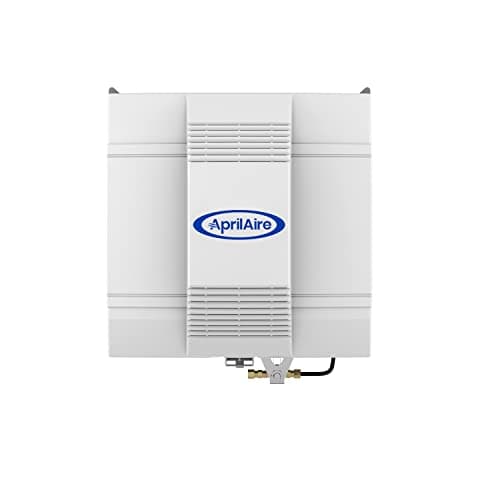 Aprilaire Model 700Top pickEighteen gallons a day against a stated 5,300 sq ft, cited to AHRI Guideline F. It is ducted, it needs installing, and it is the only sizing claim here with a standard behind it. | An actual whole house, sized against a standard | 18.0published · 5,328 sq ft | |
| 2 | 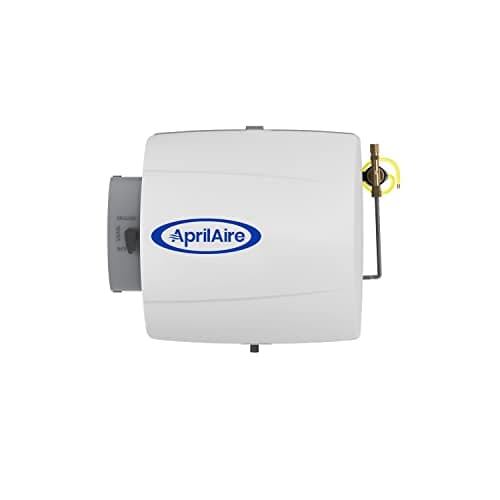 Aprilaire Model 500Twelve gallons a day against a stated 3,600 sq ft, on the same published basis as the 700. It is the bypass design, which means it borrows the furnace blower instead of bringing its own fan. | A ducted house, without the fan-powered price | 12.0published · 3,552 sq ft | |
| 3 | 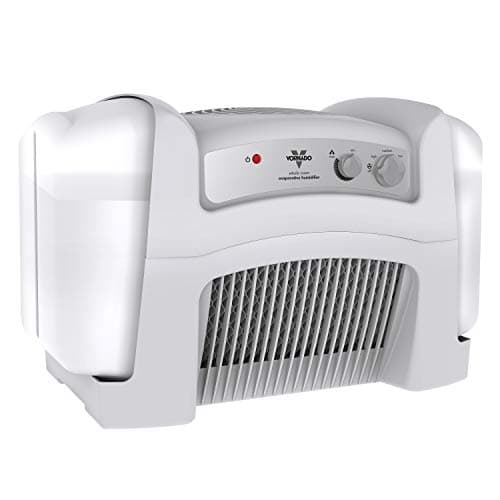 Vornado Evap40Vornado publishes an output figure and a coverage figure, and the two agree. Four gallons a day covers about 1,180 sq ft at our derived rate against a 1,000 sq ft claim. | The only coverage claim here the arithmetic supports | 4.0published · 1,184 sq ft | |
| 4 | 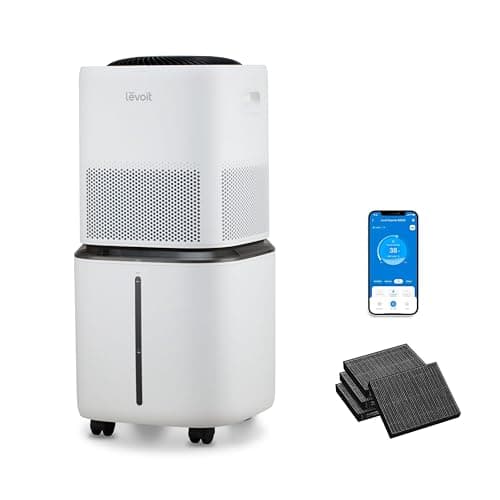 Levoit Superior 6000SSix gallons, evaporative, and a Dry Mode that dries the wicks between runs. The 3,000 sq ft claim needs five times the output its own run time implies. | Mist-free humidification with a drying cycle | 2.0implied · 592 sq ft |
Our smaller sizing pages end with a machine. This one cannot, and it is worth saying why in the first paragraph rather than the last: at 2,000 square feet the requirement exceeds what any portable humidifier on the market publishes.
We earn a commission if you buy through the links on this page, at no extra cost to you. It does not change what we recommend or the order the picks appear in. Full disclosure. Prices checked October 13, 2026.
| # | Product | Best for | Gal/day | Price |
|---|---|---|---|---|
| 1 | Aprilaire Model 700Top pickEighteen gallons a day against a stated 5,300 sq ft, cited to AHRI Guideline F. It is ducted, it needs installing, and it is the only sizing claim here with a standard behind it. | An actual whole house, sized against a standard | 18.0published · 5,328 sq ft | |
| 2 | Aprilaire Model 500Twelve gallons a day against a stated 3,600 sq ft, on the same published basis as the 700. It is the bypass design, which means it borrows the furnace blower instead of bringing its own fan. | A ducted house, without the fan-powered price | 12.0published · 3,552 sq ft | |
| 3 | Vornado Evap40Vornado publishes an output figure and a coverage figure, and the two agree. Four gallons a day covers about 1,180 sq ft at our derived rate against a 1,000 sq ft claim. | The only coverage claim here the arithmetic supports | 4.0published · 1,184 sq ft | |
| 4 | Levoit Superior 6000SSix gallons, evaporative, and a Dry Mode that dries the wicks between runs. The 3,000 sq ft claim needs five times the output its own run time implies. | Mist-free humidification with a drying cycle | 2.0implied · 592 sq ft |
The number
About 6.8 gallons a day, then, for a standard-ceiling house. Now set that against what the machines actually deliver.
| Unit | Output | Basis | Meets 6.76? |
|---|---|---|---|
| Aprilaire 700 | 18 gal/day | published | Yes, comfortably |
| Aprilaire 500 | 12 gal/day | published | Yes |
| Vornado Evap40 | 4.0 gal/day | published, continuous high | No - about 59% |
| Levoit Superior 6000S | 2.0 gal/day | implied on low fan | No - about 30% |
The largest portable output published by any maker in our set is 4 gallons a day. A 2,000 square foot house is therefore not a single-portable problem, and any product page telling you otherwise is quoting a coverage claim its own figures do not support.
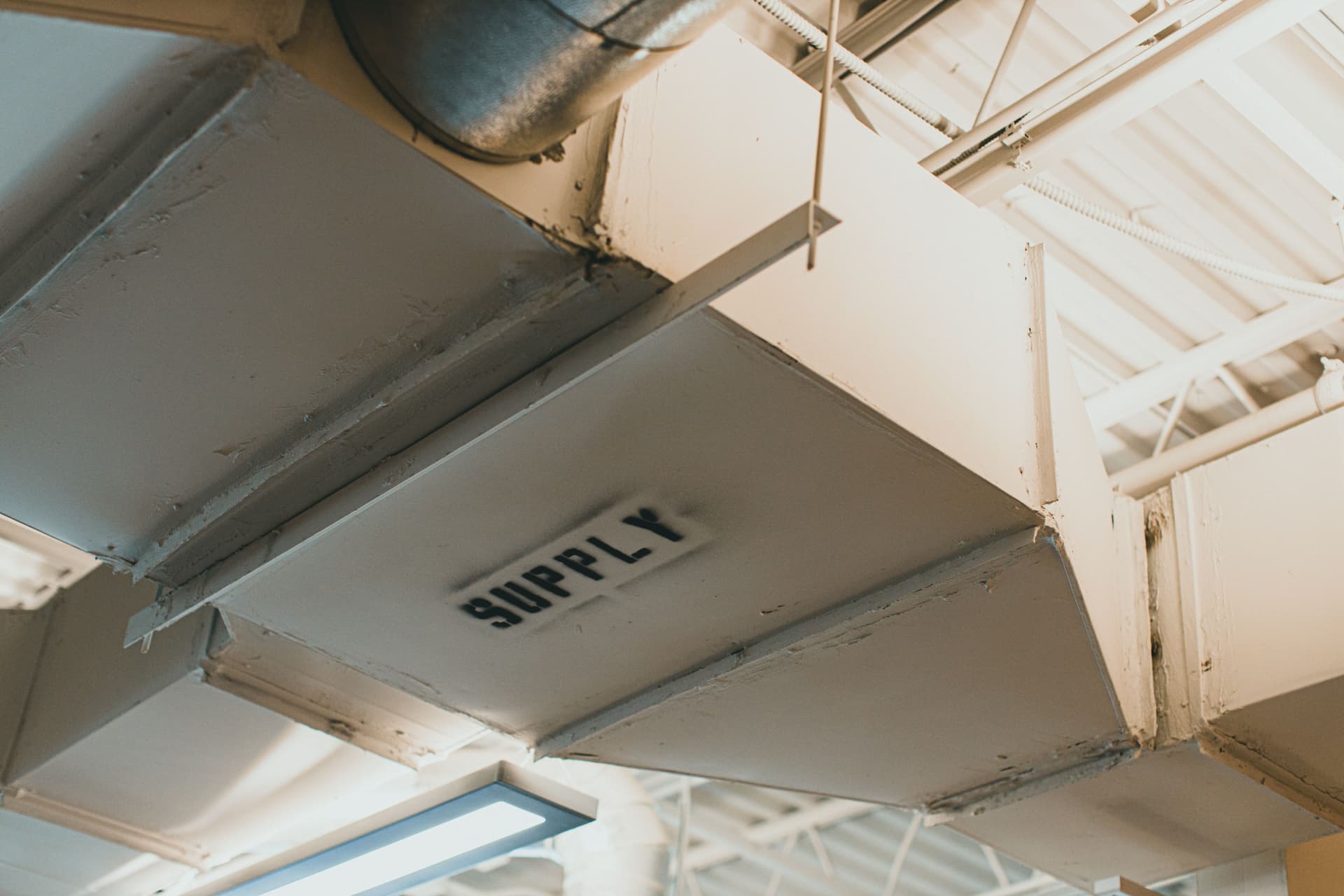
Option one: a ducted unit
If the house has forced-air heating, this is the option the arithmetic points at. The Aprilaire 500 publishes 12 gallons a day against up to 3,600 square feet and the 700 publishes 18 against 5,300 - both comfortably above the requirement, and both sized against the same published basis our rate is derived from.
The reason to consider the smaller one seriously: at 6.76 gallons a day you are asking for roughly half of what the 500 delivers, so the 700's extra capacity is headroom you are paying for rather than using. The two differ in mechanism as well as size - the 500 is a bypass unit that borrows the furnace blower, the 700 carries its own fan - and that decision is worked through on bypass vs fan-powered.
What it costs you is real: ducted forced air, a water line, a drain, and an installer. It is a project rather than a purchase. Whole house installation covers the comparison against running portables.
Option two: more than one machine
Two Vornado Evap40s at a published 4 gallons a day each is 8 gallons a day, which clears the requirement. That is a genuine alternative, and for a renter or a house without ducts it may be the only one.
The other condition is maintenance, and it scales with the machines rather than the moisture. The EPA asks for a daily empty and dry and a clean of every water-contact surface every third day - per machine. Two portables is 364 empties and about 120 cleans across a 182-day season. A ducted unit has no reservoir at all.
Option three: stop trying to do the whole house
This is the option most 2,000 square foot households should take, and it is the one no product page suggests.
You do not occupy 2,000 square feet at once. Humidify the rooms where the dryness actually costs you something - the bedroom you sleep in, the living space you spend evenings in - close their doors, and let the hallways be dry. A 700 square foot open living area needs about 2.36 gallons a day, which one Vornado covers with margin, and a bedroom needs about half a gallon.
That approach costs one or two machines instead of three, and it treats the actual problem rather than the floor plan. The exception is the house where the dryness is doing damage rather than causing discomfort - wooden floors, instruments, a piano - because that damage does not care which rooms you occupy. Hardwood floors covers the band to hold and why overshooting is the bigger risk.
What changes the number
- Ceiling height. 9 ft takes it to about 7.60 gallons a day, 10 ft to 8.45. Volume is what you are humidifying, not floor area.
- How leaky the house is. Our rate comes from Aprilaire's pairs, which it states for tightly constructed homes. An older drafty house sits above the figure; the arithmetic gives you a floor rather than a ceiling.
- What you are protecting. Comfort tolerates the low end of the EPA's 30-50% band. Wood and instruments want a narrower, steadier target, which is a bigger load.
- Whether the doors are open. This is the largest single variable and the one nobody models. An open plan behaves like one space; the same square footage split by doors behaves like five.
The short answer
If the house has ducts and you intend to stay, a ducted unit is the correct answer at this size and the Aprilaire 500 is probably enough of one. If it does not, or you rent, humidify the two or three spaces you actually use and accept that the hallway is dry. What does not work is buying one large portable, putting it in the living room, and expecting 2,000 square feet to change.
What three machines would actually cost you
If the ducted option is unavailable, it is worth seeing the multi-machine route costed in something other than money, because the purchase price is the part people compare and the maintenance is the part that decides whether it lasts the winter.
| Approach | Published output | Daily empties | Cleans | Meets 6.76 gal/day? |
|---|---|---|---|---|
| One Vornado Evap40 | 4.0 gal/day | 182 | about 60 | No |
| Two Vornado Evap40s | 8.0 gal/day | 364 | about 120 | Yes, if the space is open |
| Three mixed portables | Varies | 546 | about 180 | Only with the right three |
| One Aprilaire 500 | 12 gal/day | 0 - no reservoir | Annual water panel | Yes |
The EPA asks for a daily empty and dry and a clean of every water-contact surface every third day, per machine. Two portables is 364 empties a season; the ducted unit is none, because there is no reservoir to empty. That is the comparison that matters at this size, and it is not a money comparison at all.
If the house is older than it looks
Our rate comes from Aprilaire's published capacity-and-coverage pairs, and Aprilaire states those figures for tightly constructed homes. A 2,000 square foot house built in 1955 with original windows loses humidified air faster than a 2020 build of the same size, and the arithmetic does not know the difference.
We have no sourced multiplier for how much more a leaky house needs - air changes per hour vary too much to put a number on honestly - so treat 6.76 gallons a day as a floor rather than a target in an older house, and let a hygrometer rather than the calculation decide whether it is enough. The practical consequence is that the ducted option gets more attractive as the house gets older, not less.
The window test
Whatever you install, the ceiling on how far you can push a house this size is set by its coldest surface rather than by the machine. If condensation forms on the windows, the room is above what that glass tolerates and the humidity has to come down regardless of what the hygrometer says about comfort - the EPA's band tops out at 50 percent for reasons that include this one.
In a 2,000 square foot house with mixed window ages, the coldest window in the building is the constraint on the whole system. That is worth checking on a genuinely cold night before concluding the humidifier is undersized.
Two floors is two problems
A 2,000 square foot house is very often two floors of about 1,000, and that changes the answer in a way floor area alone does not capture. Warm air rises, the stairwell behaves like a chimney, and the upstairs of a heated house is usually both warmer and drier than the downstairs by the time January arrives.
We have no sourced way to quantify how much humidified air moves between floors - it depends on the stair opening, the ducting and how leaky the building is - so we will not put a number on it. The practical guidance that follows is to treat each floor as its own requirement rather than assuming a machine downstairs helps the bedrooms: about 3.38 gallons a day per 1,000 square foot floor at an 8 foot ceiling.
That framing also explains why the ducted option pulls ahead at this size in a way the single-floor arithmetic understates. A ducted unit distributes through the same ductwork that already heats both floors, which is the one distribution system in the house that was designed for the job. Two portables on two floors is the alternative, and it is 364 daily empties.
The picks, in full
Top pick · An actual whole house, sized against a standard
Aprilaire Model 700
Eighteen gallons a day against a stated 5,300 sq ft, cited to AHRI Guideline F. It is ducted, it needs installing, and it is the only sizing claim here with a standard behind it.
This is the reference point for the whole site. Aprilaire is the only maker in our set that publishes a capacity in gallons per day and a coverage in square feet together, and cites the residential sizing standard as the basis for pairing them. Three of its models do it consistently: 12 gal/day to 3,600 sq ft, 17 to 5,000, and 18 to 5,300. Those three pairs are where our 296 square feet per gallon per day comes from.
Everything else follows from the fact that it drains. There is no reservoir, so there is no standing water, so the pink film and the mold that dominate portable-humidifier ownership simply do not arise. The Water Panel goes once or twice a heating season instead of a wick every 30 to 60 days, which changes the recurring cost by an order of magnitude.
The honest counterweight is that this is not a purchase, it is a project. It mounts in ductwork, it needs a water line and a drain, it needs a humidistat and an outdoor sensor, and unless you are comfortable cutting into a plenum it needs a contractor. Our whole-house cost page works through the break-even against running several portables.
What works
- The only sizing claim in this set with a published standard behind it
- No reservoir, so no standing water and none of the maintenance that follows from it
- Water Panel changed once or twice a season instead of a wick every month or two
What does not
- Requires ducted forced-air heating, a water supply, a drain and, realistically, an installer
- Installed cost is a different order of magnitude from any portable here
- Wastes water: the drain design that keeps it clean also sends water to waste
Skip this ifyou rent, or you heat with anything other than a ducted forced-air system. Neither is a fixable objection.
The arithmetic
- Published output (continuous)
- 18.0 gal/day
- Covers, at 296 sq ft per gal/day
- 5,328 sq ft
- Maker’s coverage claim
- 5,300 sq ft
- Output that claim would need
- 17.9 gal/day
Output as the manufacturer publishes it. Coverage rate derived from Aprilaire’s own published capacity-and-coverage pairs.
Published specification
- Tank
- not publishedThere is no tank. It is plumbed to the water supply and drains to waste.
- Output/day
- 18 gal/daySource
- Coverage
- Up to 5,300 sq ftAprilaire states this for tightly constructed homes and cites AHRI Guideline FSource
- Power
- 24 VAC via the supplied transformerSource
- Filter
- Model 35 Water PanelAprilaire's maintenance page puts this on an annual schedule, plus an annual distribution-tray inspection. Its product page says once or twice per heating season; the two documents differ and we take the more specific one. Either way it is by far the longest interval of any unit here.Source
- Cleaning
- Built-in drain flushes mineral build-upWater does not stand inside the unit, which removes the standing-water problem entirelySource
#ad · how this is funded · price as of October 13, 2026
Pick 2 · A ducted house, without the fan-powered price
Aprilaire Model 500
Twelve gallons a day against a stated 3,600 sq ft, on the same published basis as the 700. It is the bypass design, which means it borrows the furnace blower instead of bringing its own fan.
This is the cheaper half of the whole-house decision and, for a lot of houses, the correct half. Aprilaire calls it a small bypass evaporative humidifier, and the published pair - 12 gallons a day to 3,600 square feet - works out to 300 square feet per gallon per day, which is within two percent of the rate we derive from its whole range.
The bypass design is the reason it costs less. Instead of carrying its own fan it takes a duct between the supply and return plenums and lets the furnace blower push air across the water panel. Fewer parts, less to install, less to fail - and one real consequence, which is that it moves air only when the furnace blower is moving air.
At 12 gallons a day it covers most single-family houses. The arithmetic for what your house actually needs is on our sizing chart; if it lands above about 12 gallons a day, or your ductwork has nowhere sensible for a bypass duct to go, that is the point at which the fan-powered 700 earns its extra cost.
What works
- Publishes capacity and coverage together, which almost nothing else in the category does
- No reservoir, so none of the standing-water maintenance that dominates portable humidifiers
- Water Panel on an annual schedule rather than a wick every 30 to 60 days
- Materially cheaper than the fan-powered model, installed or not
What does not
- Humidifies only while the furnace blower runs, because it has no fan of its own
- Needs somewhere to route a bypass duct between supply and return, which not every install has
- Requires ducted forced-air heating, a water supply, a drain and realistically an installer
- Wastes water: the drain that keeps it clean also sends water down it
Skip this ifyour house needs more than about 12 gallons a day, or your ductwork has no practical route for a bypass duct. Both point at the fan-powered 700 instead.
The arithmetic
- Published output (continuous)
- 12.0 gal/day
- Covers, at 296 sq ft per gal/day
- 3,552 sq ft
- Maker’s coverage claim
- 3,600 sq ft
- Output that claim would need
- 12.2 gal/day
Output as the manufacturer publishes it. Coverage rate derived from Aprilaire’s own published capacity-and-coverage pairs.
Published specification
- Tank
- not publishedThere is no tank. It is plumbed to the water supply and drains to waste.
- Output/day
- 12 gal/daySource
- Coverage
- Up to 3,600 sq ftAprilaire states this for tightly constructed homes. It is one of the three published capacity-and-coverage pairs our 296 sq ft per gal/day rate is derived from.Source
- Power
- 24 VAC via the supplied transformerAprilaire ships a Model 60 digital automatic humidistat, an outdoor temperature sensor and a saddle valve in the box.Source
- Filter
- Model 10 Water PanelAprilaire's maintenance page puts Models 300, 500, 600, 700 and 720 on an annual schedule, plus an annual distribution-tray inspection.Source
- Cleaning
- Drains to waste, so no water stands inside the unitThe same design property as the 700: nothing sits still long enough to grow a film.Source
#ad · how this is funded · price as of October 13, 2026
Pick 3 · The only coverage claim here the arithmetic supports
Vornado Evap40
Vornado publishes an output figure and a coverage figure, and the two agree. Four gallons a day covers about 1,180 sq ft at our derived rate against a 1,000 sq ft claim.
Run the check that fails everywhere else on this page and it passes here. Four gallons a day at 296 square feet per gallon per day is about 1,180 square feet of coverage, against a claim of 1,000. Vornado left itself margin instead of taking it.
It passes because it is evaporative. A wick and a fan can only put as much water into the air as the air will accept, which is why an evaporative unit self-limits near 50% relative humidity and why it cannot produce white dust: the minerals stay in the wick. The EPA's guidance to use low-mineral water exists mainly because ultrasonic and impeller units disperse what is dissolved in the tank, and this design does not.
The cost of that is the wick. Two of them, on a schedule Vornado does not publish, which is the recurring bill an ultrasonic unit does not have. Whether that trade is worth it is arithmetic, and it is worked through in full on our filter-cost page.
What works
- Publishes an output figure, and the coverage claim survives being checked against it
- Evaporative, so it cannot produce white dust and self-limits near a safe humidity
- Five-year warranty, the longest published here
What does not
- Two wicks to replace on an interval Vornado does not publish
- A fan moving air across a wet wick is audible, and no dB figure is published
- No rated wattage published
Skip this ifyou want silence. Every evaporative unit is a fan, and Vornado publishes no noise figure for this one.
The arithmetic
- Published output (continuous on high)
- 4.0 gal/day
- Covers, at 296 sq ft per gal/day
- 1,184 sq ft
- Maker’s coverage claim
- 1,000 sq ft
- Output that claim would need
- 3.4 gal/day
Output as the manufacturer publishes it. Coverage rate derived from Aprilaire’s own published capacity-and-coverage pairs.
Published specification
- Tank
- 4 galSource
- Output/day
- Up to 4 galVornado's wording: up to a 4 gallon water output when operated continuously on highSource
- Coverage
- Up to 1,000 sq ftSupported by its own published output. This is the only unit in the set where that is true.Source
- Run time
- not publishedVornado publishes output instead, which is more useful
- Power
- not published
- Filter
- Two humidifying wicksTwo are supplied, one front and one rear. No replacement interval is published.Source
- Cleaning
- Vornado states easy to clean and operateSource
#ad · how this is funded · price as of October 13, 2026
Pick 4 · Mist-free humidification with a drying cycle
Levoit Superior 6000S
Six gallons, evaporative, and a Dry Mode that dries the wicks between runs. The 3,000 sq ft claim needs five times the output its own run time implies.
Six gallons over 72 hours is two gallons a day, which covers about 590 square feet. The box says 3,000. To actually hold humidity across 3,000 square feet this unit would need to move a little over ten gallons a day, and at that rate its six-gallon reservoir would run dry in about fourteen hours. Both numbers describe the machine; only one describes it at a time, and the maker publishes no figure that reconciles them.
Dry Mode is the genuinely good idea here and it deserves credit. A wet wick sitting in a warm room is the substrate for everything the EPA warns about, and a fan cycle that dries the wicks between runs attacks that problem directly rather than adding an antimicrobial coating and hoping. It also extends wick life, which is the recurring cost.
Thirty watts to move two gallons a day is efficient, and mist-free operation means the minerals stay in the wicks rather than settling on your furniture. If you can live with a coverage claim you should mentally divide by five, this is a well-made machine.
What works
- Dry Mode addresses the real failure mode of evaporative units instead of masking it
- Mist-free, so no white dust whatever your water is like
- 30 W for six gallons of capacity, with noise published at both ends of the range
What does not
- The 3,000 sq ft claim is about five times what the published tank and run time imply
- Four wicks to replace, on an interval Levoit does not publish
- 45 dB at the top of the fan range is audible in a quiet bedroom
Skip this ifyou bought it for the 3,000 sq ft number. Size it at around 600 square feet on the setting whose run time Levoit actually publishes.
The arithmetic
- Implied output (low fan speed)
- 2.0 gal/day
- Covers, at 296 sq ft per gal/day
- 592 sq ft
- Maker’s coverage claim
- 3,000 sq ft
- Output that claim would need
- 10.1 gal/day
Output derived as tank capacity divided by published run time, times 24. Coverage rate derived from Aprilaire’s own published capacity-and-coverage pairs.
Published specification
- Tank
- 6 gal / 22.7 LSource
- Output/day
- not published
- Coverage
- 3,000 sq ft / 279 m23,000 sq ft needs about 10.1 gal/day at our derived rate. Its published tank and run time imply 2.0.Source
- Run time
- Up to 72 hOn the low fan speedSource
- Power
- 30 WSource
- Noise
- 28-45 dBSource
- Filter
- Four wick filters, pre-installedReplacements are sold by Levoit as a four-pack. No replacement interval is published.Source
- Cleaning
- Dry ModeLevoit's own wording: low and high fan speeds dry out the elevated wick filters, extending filter lifeSource
#ad · how this is funded · price as of October 13, 2026
Questions people actually ask
Do I need a humidifier on every floor of a 2,000 sq ft house?
If it is two floors of about 1,000 square feet and you want both at target, treat them as separate requirements of roughly 3.38 gallons a day each - a machine downstairs does much less for the bedrooms than people assume, and we have no sourced way to quantify how much moisture moves up a stairwell. The alternative that avoids the question entirely is a ducted unit, which distributes through the ductwork already heating both floors.
What size humidifier do I need for 2,000 square feet?
About 6.76 gallons a day at an 8 foot ceiling, rising to about 7.60 at 9 feet and 8.45 at 10. No portable humidifier we cover publishes an output that reaches it - the largest is 4 gallons a day - so the realistic options are a ducted unit, more than one machine, or humidifying only the rooms you use.
Can one humidifier do 2,000 square feet?
Only a ducted one. The Aprilaire 500 publishes 12 gallons a day and the 700 publishes 18, both above the requirement. Among portables the largest published output in our set is the Vornado Evap40 at 4 gallons a day, which is about 59% of what 2,000 square feet needs.
How many portable humidifiers for a 2,000 sq ft house?
Two Vornado Evap40s at 4 gallons a day each would clear the requirement on paper, but only if the space is open enough for their output to combine - across closed doors each machine holds its own room. Two machines also means 364 daily empties and about 120 cleans across a heating season.
Is a whole house humidifier worth it for 2,000 square feet?
If the house has forced-air ducts and you are staying, the arithmetic favors it: one machine with no reservoir against two or three with daily maintenance. If you rent, or heat with baseboard, radiators or mini-splits, it is not an option at all and the room-by-room approach is the honest answer.
Does ceiling height change the humidifier size for 2,000 sq ft?
Yes, and by more than people expect. A 9 foot ceiling adds 12.5% and a 10 foot ceiling 25%, taking 6.76 gallons a day to about 7.60 and 8.45 respectively. You are humidifying a volume, not a floor.
Sources
Every figure on this page came from one of the documents below, read on the date shown. We do not cite other review sites, forum posts or video reviews as sources of fact.
- AHRI Guideline F - Selection, Installation and Servicing of Residential Humidifiers (the residential sizing standard; ahrinet.org returned HTTP 403 to this build, so we cite it as the governing document without paraphrasing text we did not read)
- US Environmental Protection Agency - Use and Care of Home Humidifiers (relative humidity ceiling, three-day cleaning interval, low-mineral water, microorganism warning)
- Aprilaire Model 700 - manufacturer spec page (retrieved September 1, 2026)
- Aprilaire Model 500 - manufacturer spec page (retrieved September 1, 2026)
- Vornado Evap40 - manufacturer spec page (retrieved September 1, 2026)
- Levoit Superior 6000S - manufacturer spec page (retrieved September 1, 2026)
Read next
1,000 sq ft
What size humidifier for 1,000 sq ft
The 1,000 sq ft requirement worked out in gallons per day, and the units whose published output can actually meet it.
Top pick: Vornado Evap40 · 4.0 gal/day
#ad · how this is funded · price as of October 13, 2026
How many
How many humidifiers do you need?
Working out the count rather than the size: why output only adds up within one open space, what each extra machine costs you in daily maintenance, and when the honest answer is one ducted unit.
Top pick: Vornado Evap40 · 4.0 gal/day
#ad · how this is funded · price as of October 13, 2026
Whole house sizing
Whole house humidifier sizing chart
Whole-house sizing by square footage, built from published manufacturer capacity-and-coverage pairs rather than copied from another chart.
Top pick: Aprilaire Model 700 · 18.0 gal/day
#ad · how this is funded · price as of October 13, 2026
Whole house
Whole house cost, against the portables it replaces
The ownership case for a ducted humidifier against multiple portables, with the consumable arithmetic and an honest statement of what we cannot cost.
Top pick: Aprilaire Model 700 · 18.0 gal/day
#ad · how this is funded · price as of October 13, 2026
Found a number that is wrong? Tell us and we will fix it and say so. How we pick shows every formula used on this page.