Sizing
Where to put a humidifier
Placement is the only variable on this site that costs nothing and can be changed in ten seconds. It is also the one the EPA names first when a humidifier starts causing problems.
By Scooter M. · Published · Updated
We earn a commission if you buy through the links on this page, at no extra cost to you. It does not change what we recommend or the order the picks appear in. Full disclosure. Prices checked October 13, 2026.
| # | Product | Best for | Gal/day | Price |
|---|---|---|---|---|
| 1 | 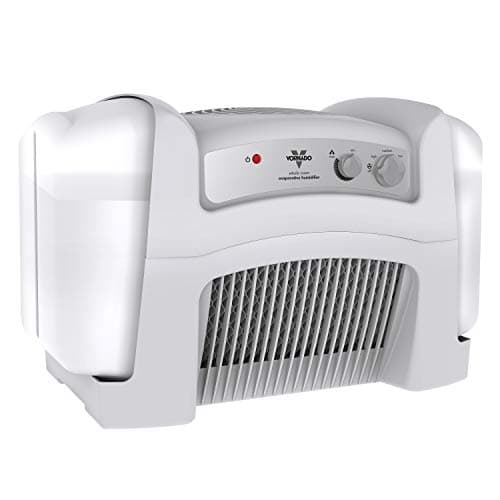 Vornado Evap40Top pickVornado publishes an output figure and a coverage figure, and the two agree. Four gallons a day covers about 1,180 sq ft at our derived rate against a 1,000 sq ft claim. | The only coverage claim here the arithmetic supports | 4.0published · 1,184 sq ft | |
| 2 | 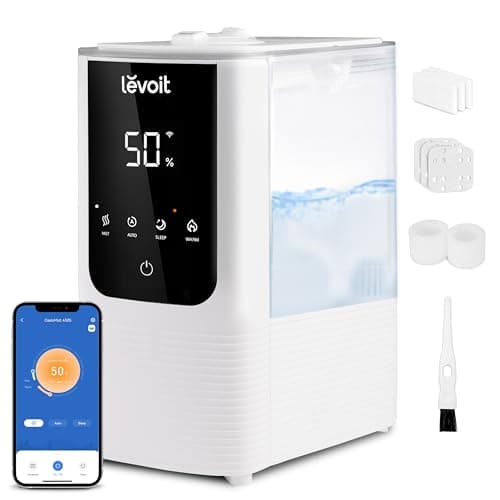 Levoit OasisMist 450SWarm and cool mist in a 4.5-liter body with a published sub-26 dB cool setting. Small, quiet, and no filter subscription. | A quiet bedside unit with a heater | 0.63implied · 188 sq ft | |
| 3 | 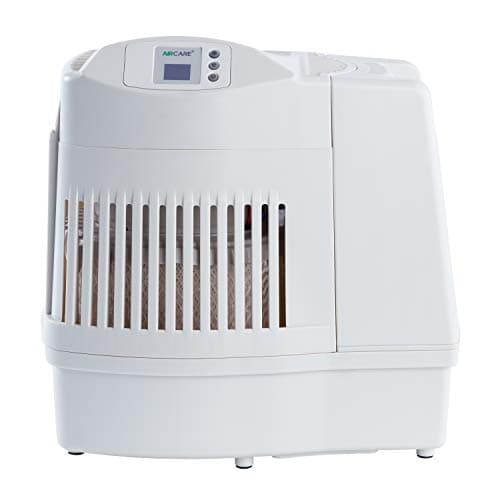 AIRCARE MA0800 Mini-ConsoleA 2.5-gallon evaporative console with three fan speeds, an adjustable humidistat and a MAF2 SuperWick. Its 2,600 sq ft claim is far beyond what its own tank and run time imply, so size it as a large room rather than a floor. | A plug-in console with its own humidistat | 1.7implied · 493 sq ft | Check price#ad |
Every other decision on this site costs money. Capacity costs money, a filter interval costs money, a ducted unit costs money and an installer. Where you put the machine costs nothing, takes ten seconds to change, and is the first thing worth trying when a humidifier is not doing what you bought it for.
It is also, unusually for this category, a question with a published answer behind it. When the EPA lists what to do about water appearing on your windows, the first of its three remedies is not a setting and not a smaller machine. It is relocate the humidifier.
We earn a commission if you buy through the links on this page, at no extra cost to you. It does not change what we recommend or the order the picks appear in. Full disclosure. Prices checked October 13, 2026.
| # | Product | Best for | Gal/day | Price |
|---|---|---|---|---|
| 1 | Vornado Evap40Top pickVornado publishes an output figure and a coverage figure, and the two agree. Four gallons a day covers about 1,180 sq ft at our derived rate against a 1,000 sq ft claim. | The only coverage claim here the arithmetic supports | 4.0published · 1,184 sq ft | |
| 2 | Levoit OasisMist 450SWarm and cool mist in a 4.5-liter body with a published sub-26 dB cool setting. Small, quiet, and no filter subscription. | A quiet bedside unit with a heater | 0.63implied · 188 sq ft | |
| 3 | AIRCARE MA0800 Mini-ConsoleA 2.5-gallon evaporative console with three fan speeds, an adjustable humidistat and a MAF2 SuperWick. Its 2,600 sq ft claim is far beyond what its own tank and run time imply, so size it as a large room rather than a floor. | A plug-in console with its own humidistat | 1.7implied · 493 sq ft | Check price#ad |
The number that has to be right first
Before any of this: the EPA's instruction is not to humidify above 50 percent relative humidity. Placement changes where moisture ends up in a room. It does not change how much moisture the machine is putting into the room, and no position in a bedroom will save you from a unit sized for a floor of a house.
So if the reason you are reading this is condensation, work the order the EPA gives: move it, then lower the humidistat, then run it less. The page on humidity levels covers the target band, and the sizing chart covers the capacity question, which is the one placement cannot answer.
What the clearance is actually for
Levoit's guidance is a few feet of clearance around the unit, and the reason it gives is worth reading rather than skimming: placing it too close to walls or furniture *can block airflow and cause moisture buildup on surfaces*. Those are two separate failures with the same cause.
- Blocked airflow starves the machine. Every humidifier that is not a ducted unit is pulling room air in through an inlet and pushing humidified air out. An evaporative unit is doing that through a wet wick, which is the whole mechanism - restrict the air and you have restricted the output, whatever the display says.
- Moisture buildup happens where the air stops. A plume that hits a wall eighteen inches away has nowhere to mix. It condenses on the wall instead of humidifying the room, which is the failure the EPA describes and the reason it says to move the unit.
- On a smart unit it also blinds the sensor. A humidistat reads the air at the machine. Boxed into a corner, it is reading its own output rather than the room, so it stops early and reports a humidity the room does not have.
Off the floor by default - and the one real exception
Levoit's instruction is to put the humidifier on a table, dresser or nightstand rather than directly on the floor, and the reason is temperature: floors are cooler, so that is where condensation appears and where carpet or hardwood takes the damage.
That is the right default for a tank-and-plume machine and it is the advice this site gives on bedroom sizing and for hardwood floors. But it is not a law of physics, and there is a category it does not describe.
So the honest version of the rule is about what is under the machine, not how high it is. The EPA puts it as two instructions: do not permit the area around the humidifier to become damp or wet, and do not allow absorbent materials, such as carpeting, drapes, or tablecloths, to become damp. A console on tile satisfies both. A small ultrasonic unit on a rug satisfies neither.
The four things to keep it away from
| Keep it away from | Why | What happens if you do not |
|---|---|---|
| Cold glass and exterior walls | These are the coldest surfaces in the room, so they reach saturation first | Water on the window, then on the sill, then the sill paint. The EPA names windows, walls and pictures specifically |
| Wood furniture | Prolonged moisture exposure warps wood | A ring or a lifted veneer on the surface you chose because it was the right height. Levoit's answer is a tray or a waterproof mat |
| TVs, computers, lamps | Excess moisture damages electronics | The one failure on this list that is expensive rather than annoying |
| Heating vents, radiators, fireplaces | Heat makes the mist evaporate too quickly | The humidity goes up the warm air stream instead of into the room you are in |
The last row is the one people get backwards, because the intuition - warm air holds more moisture, so put it near the heat - is not wrong about the physics. It is wrong about the room. Warm air rises and takes the moisture with it, and you are at seated height.
Center of the room, and why that is rarely possible
Levoit's positive recommendation is near the center of the room, because that is what lets humidity circulate evenly rather than leaving damp and dry zones. It is correct and it describes almost nobody's furniture.
What the advice is really about is air movement, not geometry, and that gives you a usable substitute: put the machine where air already moves. A few feet from where you sit, in the path between the room and its doorway, or near a return-air grille if the heating is ducted. A humidifier in a still corner humidifies that corner - which is the specific failure our basement page is built around, because basements often have no air movement at all.
This is also the one place where a fan-first design earns its keep. The Vornado EVAP40 is built around moving air across a room rather than producing a visible plume, which makes it the most placement-tolerant machine we cover. If the only spot you have is a bad one, a unit that throws air is worth more than a unit with a bigger tank.
Where the hygrometer goes, which is not next to the humidifier
If you are measuring at all - and on a machine without its own humidistat you should be - the meter goes on the far side of the room from the humidifier, not beside it. A sensor in the plume reads the plume. It will show you 55 percent while the room sits at 35, and you will turn the machine down for no reason.
The same argument applies to a smart unit's built-in sensor, which is why the clearance matters more on those than on a dumb one. Our allergies page goes further into reading the instrument rather than the display.
Finding the spot, in five minutes · PT5M
- Start from the seat, not the wallWork out where you actually spend the hours - the bed, the desk, the sofa - because that is the air you are trying to change. Everything else is a constraint on getting the machine near it.
- Rule out the cold wallIdentify the exterior wall and the windows and take them out of the running. These are where your moisture will show up as water first, and it is the failure that damages the house rather than the machine.
- Find a hard surface at the right heightFor a tank unit, a table, dresser or nightstand with a few feet of clearance around it, and a tray or mat if the surface is wood. For a console, a hard water-resistant floor, not carpet.
- Check what is within a few feetNo TV, computer or lamp in the plume. No vent, radiator or fireplace nearby. No drapes or tablecloth that can sit damp.
- Run it a night, then look at the windows in the morningThis is the test that matters and it costs one night. Water on the glass means move it, turn it down, or run it less - in that order, which is the EPA's order.
Room by room
The constraints change enough by room that we cover several of them separately. This page is the general case; these are the specific ones.
| Room | The constraint that dominates |
|---|---|
| Bedroom | A few feet from the bed rather than beside it, raised, and not aimed at you or at cold glass |
| Nursery | Out of reach is the first requirement, not the last. Cool mist rather than warm, for the burn risk |
| Basement | There is often no air movement at all, and stored cardboard, books and fabric absorb what you add |
| Hardwood floors | Never aimed at the floor, always on a tray, and under 50 percent - wood damage does not reverse |
| Dorm room | The most constrained space on the site: one desk, no floor, and a roommate |
| Office or desk | Beside a monitor, which is exactly where the electronics warning applies |
| Large or open-plan room | Near a return-air grille where the air is already moving, because one machine cannot cover a floor by standing still |
Three things placement cannot fix
Worth being clear about the limits, because moving a machine around is satisfying and can absorb a whole evening that a different decision would have settled.
- An undersized machine. If one correctly placed unit cannot hold one closed room, the machine is too small for it and no position will change that. How many humidifiers works through when the answer is a second unit and when it is a bigger one.
- An open stairwell. Warm humid air will go up it, and that is a building problem rather than a placement problem. Close the door and humidify the room you are in, or humidify the whole house. Our ceiling height page explains why no multiplier saves this case.
- A dirty machine. A unit with a clogged wick or a film in the base will underperform in the best spot in the house. The EPA's three-day cleaning interval is on how often to clean, and a wick that has stiffened with mineral is covered on filter care.
What we would buy for a difficult spot
If placement is the binding constraint rather than capacity, the ranking above is ordered for that and not for output.
The Vornado EVAP40 goes first because air movement is its design premise, which is the property that makes a compromised position workable. The honest downside is real and we say it everywhere we recommend this unit: Vornado publishes no wattage, no run time and no decibel figure for it, and no replacement interval for its two wicks, so its running cost cannot be computed before you buy it.
The Levoit OasisMist 450S is the bedside answer, where the placement question is really a noise question - Levoit publishes under 26 dB on low cool mist, which is the kind of figure most of this category declines to state. It is ultrasonic, so on hard water it will produce white dust unless you run distilled.
The AIRCARE MA0800 is here as the console case, for the reader whose honest answer to *where does it go* is the floor. It has its own adjustable humidistat, which matters more than usual when the machine is at floor level and the air you care about is not. Its 2,600 sq ft claim is far beyond what its own tank and run time imply, so size it as a large room.
The picks, in full
Top pick · The only coverage claim here the arithmetic supports
Vornado Evap40
Vornado publishes an output figure and a coverage figure, and the two agree. Four gallons a day covers about 1,180 sq ft at our derived rate against a 1,000 sq ft claim.
Run the check that fails everywhere else on this page and it passes here. Four gallons a day at 296 square feet per gallon per day is about 1,180 square feet of coverage, against a claim of 1,000. Vornado left itself margin instead of taking it.
It passes because it is evaporative. A wick and a fan can only put as much water into the air as the air will accept, which is why an evaporative unit self-limits near 50% relative humidity and why it cannot produce white dust: the minerals stay in the wick. The EPA's guidance to use low-mineral water exists mainly because ultrasonic and impeller units disperse what is dissolved in the tank, and this design does not.
The cost of that is the wick. Two of them, on a schedule Vornado does not publish, which is the recurring bill an ultrasonic unit does not have. Whether that trade is worth it is arithmetic, and it is worked through in full on our filter-cost page.
What works
- Publishes an output figure, and the coverage claim survives being checked against it
- Evaporative, so it cannot produce white dust and self-limits near a safe humidity
- Five-year warranty, the longest published here
What does not
- Two wicks to replace on an interval Vornado does not publish
- A fan moving air across a wet wick is audible, and no dB figure is published
- No rated wattage published
Skip this ifyou want silence. Every evaporative unit is a fan, and Vornado publishes no noise figure for this one.
The arithmetic
- Published output (continuous on high)
- 4.0 gal/day
- Covers, at 296 sq ft per gal/day
- 1,184 sq ft
- Maker’s coverage claim
- 1,000 sq ft
- Output that claim would need
- 3.4 gal/day
Output as the manufacturer publishes it. Coverage rate derived from Aprilaire’s own published capacity-and-coverage pairs.
Published specification
- Tank
- 4 galSource
- Output/day
- Up to 4 galVornado's wording: up to a 4 gallon water output when operated continuously on highSource
- Coverage
- Up to 1,000 sq ftSupported by its own published output. This is the only unit in the set where that is true.Source
- Run time
- not publishedVornado publishes output instead, which is more useful
- Power
- not published
- Filter
- Two humidifying wicksTwo are supplied, one front and one rear. No replacement interval is published.Source
- Cleaning
- Vornado states easy to clean and operateSource
#ad · how this is funded · price as of October 13, 2026
Pick 2 · A quiet bedside unit with a heater
Levoit OasisMist 450S
Warm and cool mist in a 4.5-liter body with a published sub-26 dB cool setting. Small, quiet, and no filter subscription.
Under 26 dB on low cool mist is the kind of figure that decides whether a machine stays in a bedroom, and Levoit publishes both ends of the range rather than just the flattering one. The 41 dB high warm figure is honest and worth knowing before you buy.
0.64 gallons a day implied on low puts this in the same real-world class as the Classic 300S despite a smaller tank: same daily water, fewer hours between refills. If the 300S is too tall for a nightstand, this is the same machine in a shorter body with a heater added.
The 280 W rating is the heater, as it is on the LV600S. On cool mist the draw is a fraction of that. If you never use warm mist you are not paying for it, but you did buy it.
What works
- Publishes noise at both extremes rather than only the quiet one
- Warm and cool in a body small enough for a nightstand
- No wick filter to buy on a schedule
What does not
- 4.5 L means more refills than the 6 L and 10 L units for the same daily output
- 280 W rated with the heater on
- The 430 sq ft claim is about 2.3x what its published tank and run time imply
Skip this ifyou want the biggest room this brand covers. The 6-liter LV600S publishes an output figure and a larger claim for similar money.
The arithmetic
- Implied output (low mist)
- 0.63 gal/day
- Covers, at 296 sq ft per gal/day
- 188 sq ft
- Maker’s coverage claim
- 430 sq ft
- Output that claim would need
- 1.5 gal/day
Output derived as tank capacity divided by published run time, times 24. Coverage rate derived from Aprilaire’s own published capacity-and-coverage pairs.
Published specification
- Tank
- 1.19 gal / 4.5 LSource
- Output/day
- not published
- Coverage
- 215-430 sq ft / 20-40 m2Published tank and run time imply roughly 188 sq ft at our derived rateSource
- Run time
- Up to 45 hOn the low mist settingSource
- Power
- 280 WRated with the warm-mist heater engagedSource
- Noise
- Under 26 dB low cool, under 41 dB high warmSource
- Filter
- Water filter sponge, 2 suppliedSource
- Cleaning
- Top-fillSource
$89.99 · 16% off
#ad · how this is funded · price as of October 13, 2026
Pick 3 · A plug-in console with its own humidistat
AIRCARE MA0800 Mini-Console
A 2.5-gallon evaporative console with three fan speeds, an adjustable humidistat and a MAF2 SuperWick. Its 2,600 sq ft claim is far beyond what its own tank and run time imply, so size it as a large room rather than a floor.
Two published figures that describe opposite ends of the machine, and none of the numbers that would join them up. A 2.5-gallon tank lasting 36 hours is about 1.67 gallons a day, or roughly 493 square feet at our derived rate. Covering the claimed 2,600 square feet would take about 8.8 gallons a day, at which rate the same tank empties in under seven hours.
Both can be true at once: 36 hours is AIRCARE's maximum run time, which will be the lowest of the three fan speeds, and 2,600 square feet will be the highest. It can certainly move more than 1.67 gallons a day on a higher speed. AIRCARE does not say how much more, so its own published data supports sizing it as a large room, not a whole floor.
What it has that most units in our set do not is an adjustable humidistat with digital controls, stated on AIRCARE's own page. On an evaporative machine, which already slows down as the air approaches saturation, that is a second brake against overshooting - and the MAF2 SuperWick keeps your tap water's minerals out of the air.
What works
- Adjustable humidistat and digital controls, per AIRCARE's own specification
- Evaporative SuperWick captures minerals, so no white dust
- Three fan speeds to trade output against noise
What does not
- No published output figure anywhere on the manufacturer page
- The 2,600 sq ft claim and the 36-hour run time cannot both describe the same setting
- No published noise figure, wattage or wick replacement interval
Skip this ifyou want to humidify a whole floor on the strength of the box. Its own tank and run time support a large room, not 2,600 square feet.
The arithmetic
- Implied output (maximum published run time)
- 1.7 gal/day
- Covers, at 296 sq ft per gal/day
- 493 sq ft
- Maker’s coverage claim
- 2,600 sq ft
- Output that claim would need
- 8.8 gal/day
Output derived as tank capacity divided by published run time, times 24. Coverage rate derived from Aprilaire’s own published capacity-and-coverage pairs.
Published specification
- Tank
- 2.5 galSource
- Output/day
- not publishedAIRCARE's page gives a tank capacity and a maximum run time, but no daily output.
- Coverage
- Up to 2,600 sq ft2,600 sq ft needs about 8.8 gal/day at our derived rate. AIRCARE publishes no output figure, so the claim cannot be checked against its own data.Source
- Run time
- Up to 36 hAIRCARE's maximum run time, which will describe the lowest of its three fan speedsSource
- Power
- not published
- Filter
- MAF2 SuperWickAIRCARE publishes no replacement intervalSource
- Cleaning
- Evaporative wick holds minerals back from the roomAdjustable humidistat and digital controls, per AIRCARESource
#ad · how this is funded · price as of October 13, 2026
Questions people actually ask
Where should I put a humidifier in a bedroom?
A few feet from the bed rather than next to it, raised onto a nightstand or dresser rather than on the floor, and not aimed at the bed or at a window. Levoit's own guidance is a few feet of clearance around the unit and a table or dresser rather than the floor, because floors are cooler and that is where condensation appears.
Can you put a humidifier on the floor?
A console humidifier is designed for the floor - it is a floor-standing appliance and there is nowhere else for it to go. A tank-and-plume unit should be raised, because floors are cooler and condensation forms there. Either way what matters most is the surface: hard and water-resistant, never carpet, because the EPA says not to let absorbent materials such as carpeting become damp.
How far from a wall should a humidifier be?
Levoit's guidance is at least a few feet of clearance around the unit. Too close to walls or furniture blocks the airflow the machine needs and causes moisture to build up on the surface instead of humidifying the room. On a smart unit it also puts the humidity sensor inside the machine's own output, so it reads high and stops early.
Should a humidifier be high or low in a room?
Raised, for anything with a tank and a visible plume - roughly table or nightstand height. The exception is an evaporative console, which is built to stand on the floor and draw air in at floor level. Height is a proxy for the real rule, which is that the surface under and around the machine must not be allowed to get damp.
Is it bad to put a humidifier near a window?
Yes, and it is the most common placement mistake. Glass and exterior walls are the coldest surfaces in the room, so they reach saturation first and the moisture you are adding condenses there. The EPA specifically names water condensing on windows, walls or pictures as the signal to relocate the humidifier.
Can I put a humidifier next to my TV or computer?
No. Levoit's guidance is to avoid placing a humidifier near TVs, computers or lamps, because excess moisture damages electronics. It is the only item on the keep-away list where the consequence is expensive rather than cosmetic, which makes a desk humidifier a placement problem more than a sizing one.
Does moving the humidifier actually fix condensation on windows?
It is the first thing to try, on the EPA's own ordering: relocate the humidifier, lower its humidistat setting, or reduce its use. If moving it away from the cold surface does not stop the condensation, the machine is putting more water into the room than the room can hold, and that is a sizing and humidistat question rather than a placement one.
Sources
Every figure on this page came from one of the documents below, read on the date shown. We do not cite other review sites, forum posts or video reviews as sources of fact.
- US Environmental Protection Agency - Use and Care of Home Humidifiers (relative humidity ceiling, three-day cleaning interval, low-mineral water, microorganism warning)
- Levoit - Where to Place Your Humidifier for the Best Performance (a few feet of clearance around the unit; on a table, dresser or nightstand rather than directly on the floor; not near TVs, computers, lamps, heating vents, radiators or fireplaces; a tray or waterproof mat under it on wood; near the center of the room; a 30-50% target; retrieved September 27, 2026)
- AIRCARE MA0800 Mini-Console - manufacturer spec page (retrieved September 17, 2026)
- Levoit OasisMist 450S - manufacturer spec page (retrieved September 1, 2026)
- Vornado Evap40 - manufacturer spec page (retrieved September 1, 2026)
- ASHRAE Handbook - HVAC Systems and Equipment, Chapter 22: Humidifiers (the engineering reference for humidification load and window-condensation limits)
Read next
Bedrooms
Sizing a humidifier for a bedroom
Bedroom sizing in gallons per day, and why once the capacity question is settled the decision is really about noise and cleaning.
Top pick: Levoit OasisMist 450S · 0.63 gal/day
$89.99 · 16% off
#ad · how this is funded · price as of October 13, 2026
Best for basements
Best humidifiers for basements
Basement picks, all evaporative, plus the measurement you should take before buying anything at all.
Top pick: Levoit Superior 6000S · 2.0 gal/day
#ad · how this is funded · price as of October 13, 2026
Wood and instruments
Humidifiers for hardwood floors
Protecting wooden floors and furniture: the band to hold, why overshooting is the bigger risk, and the machines suited to steady control.
Top pick: Vornado Evap40 · 4.0 gal/day
#ad · how this is funded · price as of October 13, 2026

Ideal indoor humidity in winter
The 30-50% relative humidity band, the EPA's stated ceiling, and the window-condensation limit that overrides it in cold weather.
Found a number that is wrong? Tell us and we will fix it and say so. How we pick shows every formula used on this page.