Picks
Best humidifiers for basements
Measure before you buy. If the reading really is under 30 percent, everything here is evaporative for one specific reason: an evaporative unit cannot over-humidify a cold room.
By Scooter M. · Published · Updated
We earn a commission if you buy through the links on this page, at no extra cost to you. It does not change what we recommend or the order the picks appear in. Full disclosure. Prices checked October 16, 2026.
| # | Product | Best for | Gal/day | Price |
|---|---|---|---|---|
| 1 | 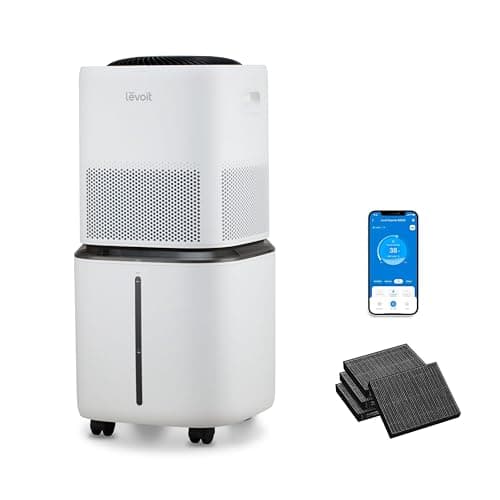 Levoit Superior 6000STop pickSix gallons, evaporative, and a Dry Mode that dries the wicks between runs. The 3,000 sq ft claim needs five times the output its own run time implies. | Mist-free humidification with a drying cycle | 2.0implied · 592 sq ft | |
| 2 | 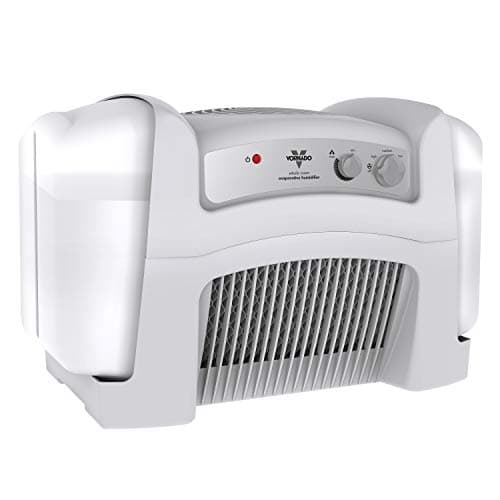 Vornado Evap40Vornado publishes an output figure and a coverage figure, and the two agree. Four gallons a day covers about 1,180 sq ft at our derived rate against a 1,000 sq ft claim. | The only coverage claim here the arithmetic supports | 4.0published · 1,184 sq ft | |
| 3 | 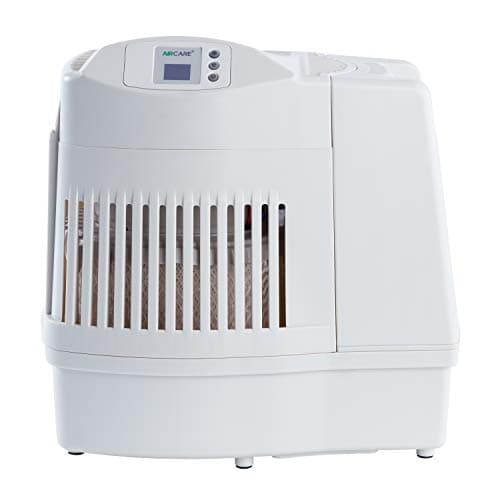 AIRCARE MA0800 Mini-ConsoleA 2.5-gallon evaporative console with three fan speeds, an adjustable humidistat and a MAF2 SuperWick. Its 2,600 sq ft claim is far beyond what its own tank and run time imply, so size it as a large room rather than a floor. | A plug-in console with its own humidistat | 1.7implied · 493 sq ft | |
| 4 | 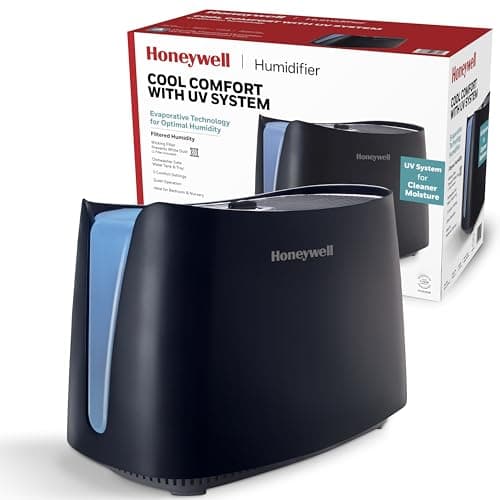 Honeywell HCM350 Germ Free Cool MoistureA break-resistant, dishwasher-safe tank and a wide opening. It is the only unit here designed so the hardest part of ownership is easy. | Cleaning, without qualification | 1.0implied · 296 sq ft |
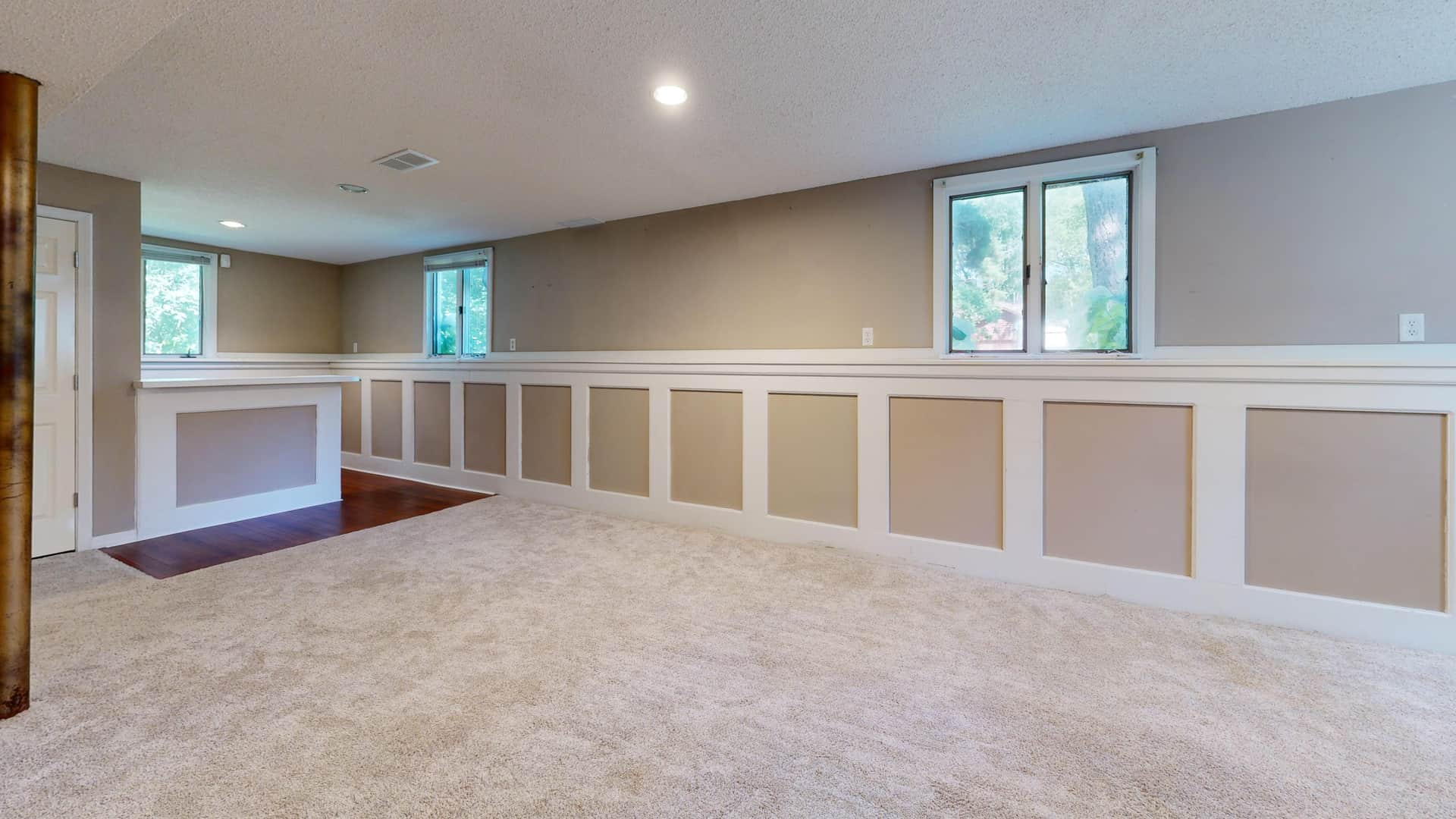
That warning is not boilerplate. A basement is where condensation forms first, and it forms on below-grade walls behind stored boxes where you will not see it for months. Getting this decision wrong costs more than getting it right saves.
We earn a commission if you buy through the links on this page, at no extra cost to you. It does not change what we recommend or the order the picks appear in. Full disclosure. Prices checked October 16, 2026.
| # | Product | Best for | Gal/day | Price |
|---|---|---|---|---|
| 1 | Levoit Superior 6000STop pickSix gallons, evaporative, and a Dry Mode that dries the wicks between runs. The 3,000 sq ft claim needs five times the output its own run time implies. | Mist-free humidification with a drying cycle | 2.0implied · 592 sq ft | |
| 2 | Vornado Evap40Vornado publishes an output figure and a coverage figure, and the two agree. Four gallons a day covers about 1,180 sq ft at our derived rate against a 1,000 sq ft claim. | The only coverage claim here the arithmetic supports | 4.0published · 1,184 sq ft | |
| 3 | AIRCARE MA0800 Mini-ConsoleA 2.5-gallon evaporative console with three fan speeds, an adjustable humidistat and a MAF2 SuperWick. Its 2,600 sq ft claim is far beyond what its own tank and run time imply, so size it as a large room rather than a floor. | A plug-in console with its own humidistat | 1.7implied · 493 sq ft | |
| 4 | Honeywell HCM350 Germ Free Cool MoistureA break-resistant, dishwasher-safe tank and a wide opening. It is the only unit here designed so the hardest part of ownership is easy. | Cleaning, without qualification | 1.0implied · 296 sq ft |
When a basement genuinely is too dry
There is a specific pattern: a finished, well-sealed basement heated by the same forced-air system as the rest of the house, in a cold-winter climate. The heating dries it exactly as it dries upstairs, and being below grade does not help when nothing is getting in.
The other case is a workshop or music room, where the concern is wood rather than comfort. Instruments and furniture in a space at 20 percent all winter will shrink and check.
The sizing, with the ceiling working for you
Why every pick is evaporative
Two reasons, both specific to below-grade rooms.
It self-limits. A wick can only give up as much water as the surrounding air will accept, so as the space approaches saturation the output falls away by itself. In the coldest, dampest room in the house that is a real safeguard. An ultrasonic unit has no such feedback and will keep atomizing into a basement already at 60 percent, well past the EPA's stated 50 percent ceiling.
No white dust. Basements are where people run humidifiers on whatever comes out of the nearest tap, without much thought about water quality. An evaporative wick captures the minerals; an ultrasonic disc broadcasts them. White dust.
The Superior 6000S is first for a third reason
Its Dry Mode uses the fan to dry the elevated wick filters between runs. In a cool, still, below-grade room - the least favorable drying environment in the house - a machine that actively dries its own wick is doing something genuinely useful. Levoit also states it extends filter life, which matters because basements tend to be where a humidifier gets left running and forgotten.
Read its coverage claim with care, as always: 3,000 square feet would need about 10.1 gallons a day and its published tank and run time imply 2.0. At a basement's typical 7 ft ceiling, 2.0 gallons a day covers around 675 square feet, which is a genuinely useful amount of basement.
What goes wrong down here
- Cold exterior walls. Below-grade walls are the coldest surfaces in the house and will condense before your windows do - behind whatever is stacked against them.
- Dead air. Basements often have no air movement at all, so a humidifier in a corner humidifies that corner. Place it where air moves, or add a slow fan. Where to put a humidifier covers the general case.
- Stored cardboard, books and fabric. These absorb moisture and show mildew long before the room does. They are your early warning system.
- Seasonal reversal. A basement that is too dry in January is frequently too damp in July. You may genuinely need both machines at different times of year.
How to run it
- Set the target no higher than 40 percent, not the 50 percent ceiling. Below-grade walls condense earlier than the rest of the house.
- Put the hygrometer across the room from the humidifier, not next to it.
- Check the coldest corner and the exterior walls by hand for the first fortnight.
- Keep to the EPA's every-third-day cleaning schedule. A forgotten machine in a basement is the classic pink film case.
- Reassess in spring. The right answer in January is often the wrong one in June.
The picks, in full
Top pick · Mist-free humidification with a drying cycle
Levoit Superior 6000S
Six gallons, evaporative, and a Dry Mode that dries the wicks between runs. The 3,000 sq ft claim needs five times the output its own run time implies.
Six gallons over 72 hours is two gallons a day, which covers about 590 square feet. The box says 3,000. To actually hold humidity across 3,000 square feet this unit would need to move a little over ten gallons a day, and at that rate its six-gallon reservoir would run dry in about fourteen hours. Both numbers describe the machine; only one describes it at a time, and the maker publishes no figure that reconciles them.
Dry Mode is the genuinely good idea here and it deserves credit. A wet wick sitting in a warm room is the substrate for everything the EPA warns about, and a fan cycle that dries the wicks between runs attacks that problem directly rather than adding an antimicrobial coating and hoping. It also extends wick life, which is the recurring cost.
Thirty watts to move two gallons a day is efficient, and mist-free operation means the minerals stay in the wicks rather than settling on your furniture. If you can live with a coverage claim you should mentally divide by five, this is a well-made machine.
What works
- Dry Mode addresses the real failure mode of evaporative units instead of masking it
- Mist-free, so no white dust whatever your water is like
- 30 W for six gallons of capacity, with noise published at both ends of the range
What does not
- The 3,000 sq ft claim is about five times what the published tank and run time imply
- Four wicks to replace, on an interval Levoit does not publish
- 45 dB at the top of the fan range is audible in a quiet bedroom
Skip this ifyou bought it for the 3,000 sq ft number. Size it at around 600 square feet on the setting whose run time Levoit actually publishes.
The arithmetic
- Implied output (low fan speed)
- 2.0 gal/day
- Covers, at 296 sq ft per gal/day
- 592 sq ft
- Maker’s coverage claim
- 3,000 sq ft
- Output that claim would need
- 10.1 gal/day
Output derived as tank capacity divided by published run time, times 24. Coverage rate derived from Aprilaire’s own published capacity-and-coverage pairs.
Published specification
- Tank
- 6 gal / 22.7 LSource
- Output/day
- not published
- Coverage
- 3,000 sq ft / 279 m23,000 sq ft needs about 10.1 gal/day at our derived rate. Its published tank and run time imply 2.0.Source
- Run time
- Up to 72 hOn the low fan speedSource
- Power
- 30 WSource
- Noise
- 28-45 dBSource
- Filter
- Four wick filters, pre-installedReplacements are sold by Levoit as a four-pack. No replacement interval is published.Source
- Cleaning
- Dry ModeLevoit's own wording: low and high fan speeds dry out the elevated wick filters, extending filter lifeSource
#ad · how this is funded · price as of October 16, 2026
Pick 2 · The only coverage claim here the arithmetic supports
Vornado Evap40
Vornado publishes an output figure and a coverage figure, and the two agree. Four gallons a day covers about 1,180 sq ft at our derived rate against a 1,000 sq ft claim.
Run the check that fails everywhere else on this page and it passes here. Four gallons a day at 296 square feet per gallon per day is about 1,180 square feet of coverage, against a claim of 1,000. Vornado left itself margin instead of taking it.
It passes because it is evaporative. A wick and a fan can only put as much water into the air as the air will accept, which is why an evaporative unit self-limits near 50% relative humidity and why it cannot produce white dust: the minerals stay in the wick. The EPA's guidance to use low-mineral water exists mainly because ultrasonic and impeller units disperse what is dissolved in the tank, and this design does not.
The cost of that is the wick. Two of them, on a schedule Vornado does not publish, which is the recurring bill an ultrasonic unit does not have. Whether that trade is worth it is arithmetic, and it is worked through in full on our filter-cost page.
What works
- Publishes an output figure, and the coverage claim survives being checked against it
- Evaporative, so it cannot produce white dust and self-limits near a safe humidity
- Five-year warranty, the longest published here
What does not
- Two wicks to replace on an interval Vornado does not publish
- A fan moving air across a wet wick is audible, and no dB figure is published
- No rated wattage published
Skip this ifyou want silence. Every evaporative unit is a fan, and Vornado publishes no noise figure for this one.
The arithmetic
- Published output (continuous on high)
- 4.0 gal/day
- Covers, at 296 sq ft per gal/day
- 1,184 sq ft
- Maker’s coverage claim
- 1,000 sq ft
- Output that claim would need
- 3.4 gal/day
Output as the manufacturer publishes it. Coverage rate derived from Aprilaire’s own published capacity-and-coverage pairs.
Published specification
- Tank
- 4 galSource
- Output/day
- Up to 4 galVornado's wording: up to a 4 gallon water output when operated continuously on highSource
- Coverage
- Up to 1,000 sq ftSupported by its own published output. This is the only unit in the set where that is true.Source
- Run time
- not publishedVornado publishes output instead, which is more useful
- Power
- not published
- Filter
- Two humidifying wicksTwo are supplied, one front and one rear. No replacement interval is published.Source
- Cleaning
- Vornado states easy to clean and operateSource
#ad · how this is funded · price as of October 16, 2026
Pick 3 · A plug-in console with its own humidistat
AIRCARE MA0800 Mini-Console
A 2.5-gallon evaporative console with three fan speeds, an adjustable humidistat and a MAF2 SuperWick. Its 2,600 sq ft claim is far beyond what its own tank and run time imply, so size it as a large room rather than a floor.
Two published figures that describe opposite ends of the machine, and none of the numbers that would join them up. A 2.5-gallon tank lasting 36 hours is about 1.67 gallons a day, or roughly 493 square feet at our derived rate. Covering the claimed 2,600 square feet would take about 8.8 gallons a day, at which rate the same tank empties in under seven hours.
Both can be true at once: 36 hours is AIRCARE's maximum run time, which will be the lowest of the three fan speeds, and 2,600 square feet will be the highest. It can certainly move more than 1.67 gallons a day on a higher speed. AIRCARE does not say how much more, so its own published data supports sizing it as a large room, not a whole floor.
What it has that most units in our set do not is an adjustable humidistat with digital controls, stated on AIRCARE's own page. On an evaporative machine, which already slows down as the air approaches saturation, that is a second brake against overshooting - and the MAF2 SuperWick keeps your tap water's minerals out of the air.
What works
- Adjustable humidistat and digital controls, per AIRCARE's own specification
- Evaporative SuperWick captures minerals, so no white dust
- Three fan speeds to trade output against noise
What does not
- No published output figure anywhere on the manufacturer page
- The 2,600 sq ft claim and the 36-hour run time cannot both describe the same setting
- No published noise figure, wattage or wick replacement interval
Skip this ifyou want to humidify a whole floor on the strength of the box. Its own tank and run time support a large room, not 2,600 square feet.
The arithmetic
- Implied output (maximum published run time)
- 1.7 gal/day
- Covers, at 296 sq ft per gal/day
- 493 sq ft
- Maker’s coverage claim
- 2,600 sq ft
- Output that claim would need
- 8.8 gal/day
Output derived as tank capacity divided by published run time, times 24. Coverage rate derived from Aprilaire’s own published capacity-and-coverage pairs.
Published specification
- Tank
- 2.5 galSource
- Output/day
- not publishedAIRCARE's page gives a tank capacity and a maximum run time, but no daily output.
- Coverage
- Up to 2,600 sq ft2,600 sq ft needs about 8.8 gal/day at our derived rate. AIRCARE publishes no output figure, so the claim cannot be checked against its own data.Source
- Run time
- Up to 36 hAIRCARE's maximum run time, which will describe the lowest of its three fan speedsSource
- Power
- not published
- Filter
- MAF2 SuperWickAIRCARE publishes no replacement intervalSource
- Cleaning
- Evaporative wick holds minerals back from the roomAdjustable humidistat and digital controls, per AIRCARESource
#ad · how this is funded · price as of October 16, 2026
Pick 4 · Cleaning, without qualification
Honeywell HCM350 Germ Free Cool Moisture
A break-resistant, dishwasher-safe tank and a wide opening. It is the only unit here designed so the hardest part of ownership is easy.
One gallon over 24 hours is one gallon a day, which at our derived rate is about 296 square feet. Honeywell says medium room. Those two statements agree, which is a low bar that most of this category fails to clear.
The reason to buy it is the tank. Dishwasher-safe and break-resistant, with an opening wide enough to actually reach inside, against an EPA instruction to clean every third day. A humidifier you will genuinely clean twice a week beats a larger one you will clean twice a winter, and this is the only unit here whose maker treats that as a design requirement rather than a footnote.
There is one inconsistency worth naming. The specification table on Honeywell's own page says a 1 gallon tank; the feature copy a few hundred pixels above it says 1.1 gallons. It is a small discrepancy and it is on the maker's own page, which is a fair illustration of why we quote the table and say which one we took.
What works
- Dishwasher-safe, break-resistant tank with a wide opening, which is the whole ballgame for maintenance
- The wicking filter captures minerals, so no white dust regardless of your water
- The published tank and run time are consistent with the room size claimed
What does not
- HAC504 wicks are a recurring cost with no interval published on the product page
- One gallon a day is a bedroom, not a floor of a house
- The maker's own page states two different tank capacities
Skip this ifyou need to humidify an open-plan living space. This is a one-room machine and its own figures say so.
The arithmetic
- Implied output (continuous)
- 1.0 gal/day
- Covers, at 296 sq ft per gal/day
- 296 sq ft
Output derived as tank capacity divided by published run time, times 24. Coverage rate derived from Aprilaire’s own published capacity-and-coverage pairs.
Published specification
- Tank
- 1 galHoneywell's own specification table says 1 gallon; the marketing copy on the same page says 1.1. We quote the table.Source
- Output/day
- not publishedTank and run time only
- Coverage
- Medium roomHoneywell publishes a size class rather than a number. Its published tank and run time imply about 1 gallon per day, or roughly 296 sq ft at our derived rate.Source
- Run time
- Up to 24 hSource
- Power
- not published
- Filter
- HAC504 Filter AOne included. Honeywell states its own filters should be used.Source
- Cleaning
- Dishwasher safe, break resistant tank, wide openingHoneywell's own wording. It also states the wicking filter removes impurities from the water, reducing white dust.Source
#ad · how this is funded · price as of October 16, 2026
Questions people actually ask
What is the best humidifier for a basement?
An evaporative one, because it self-limits as the air approaches saturation - which matters a great deal in the coldest room in the house. In our set the Levoit Superior 6000S is the pick, partly for its Dry Mode, which dries the wicks between runs in an environment that dries nothing well on its own.
Does a basement need a humidifier or a dehumidifier?
Usually a dehumidifier. Basements sit against cool earth and are where moisture condenses first. Measure with a hygrometer for a week: under 30 percent relative humidity needs humidifying, over 50 needs dehumidifying, and in between needs neither.
What size humidifier for a 1,000 sq ft basement?
About 2.96 gallons a day at a typical 7 ft basement ceiling, against 3.38 for the same floor area at 8 ft. Load follows volume, so the lower ceiling works in your favor.
Why should a basement humidifier be evaporative?
Because it cannot easily over-humidify. Evaporation slows as the surrounding air approaches saturation, so the machine has a physical governor. An ultrasonic unit will keep atomizing into an already-damp room, and in a basement the resulting condensation forms on below-grade walls where you cannot see it.
Sources
Every figure on this page came from one of the documents below, read on the date shown. We do not cite other review sites, forum posts or video reviews as sources of fact.
- Levoit Superior 6000S - manufacturer spec page (retrieved September 1, 2026)
- Vornado Evap40 - manufacturer spec page (retrieved September 1, 2026)
- AIRCARE MA0800 Mini-Console - manufacturer spec page (retrieved September 17, 2026)
- Honeywell HCM350 - manufacturer spec page (retrieved September 1, 2026)
- US Environmental Protection Agency - Use and Care of Home Humidifiers (relative humidity ceiling, three-day cleaning interval, low-mineral water, microorganism warning)
Read next
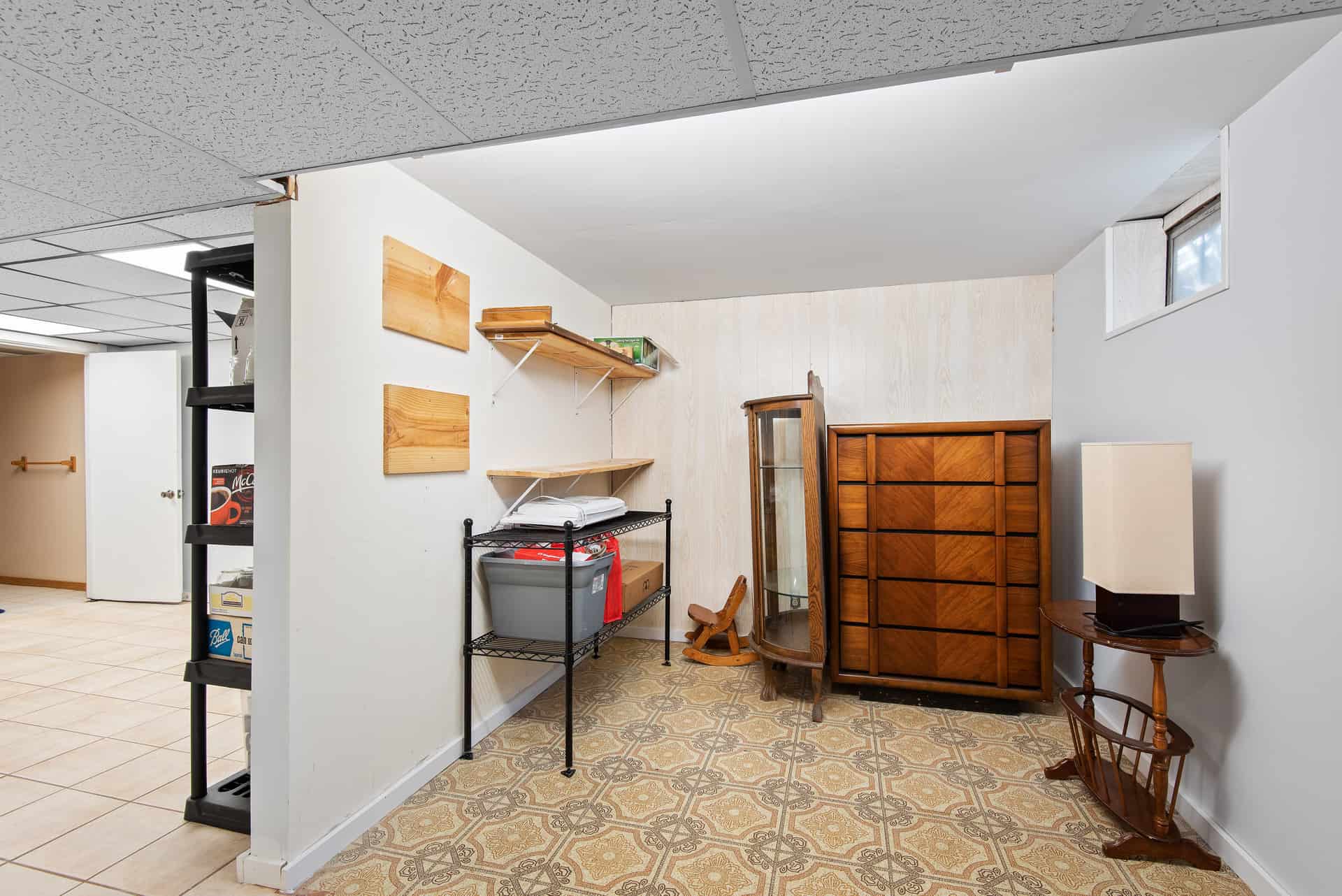
Basements
Sizing a humidifier for a basement
How to tell whether a basement needs humidifying or dehumidifying, and the sizing arithmetic if it genuinely needs moisture added.
Top pick: Levoit Superior 6000S · 2.0 gal/day
#ad · how this is funded · price as of October 16, 2026
Which direction
Humidifier vs dehumidifier
How to tell whether your house is too dry or too damp, why guessing is expensive, and what to do about seasonal reversal.
Top pick: Levoit Classic 300S · 0.63 gal/day
#ad · how this is funded · price as of October 16, 2026
Evaporative
Evaporative humidifiers
How evaporative humidifiers work, the self-limiting property that makes them safer, and the wick bill that is their real cost.
Top pick: Vornado Evap40 · 4.0 gal/day
#ad · how this is funded · price as of October 16, 2026
Where to put a humidifier
Where to put a humidifier, and why: what the clearance around it is actually for, why off the floor is the default and consoles are the exception, the surfaces to keep it away from, and the three faults placement cannot fix.
Top pick: Vornado Evap40 · 4.0 gal/day
#ad · how this is funded · price as of October 16, 2026
Found a number that is wrong? Tell us and we will fix it and say so. How we pick shows every formula used on this page.